EcoAdvantures inspired young researchers across Slovenia
In the 2025/2026 school year, as part of the LIFE2RIVERS project, we successfully completed the EkoAvanture programme, which brings rivers, their inhabitants and the importance of freshwater ecosystem conservation closer to young people. Across primary and secondary schools throughout Slovenia, we carried out 35 hands‑on workshops involving 941 pupils and students.
Each workshop was slightly different, as we adapted the programme to the age of participants, group size, the learning objectives of each school and the characteristics of the local watercourse. This flexibility — the ability to adjust to different environments and groups — is one of the greatest strengths of the EkoAvanture programme.
How do EkoAvanture actually unfold?
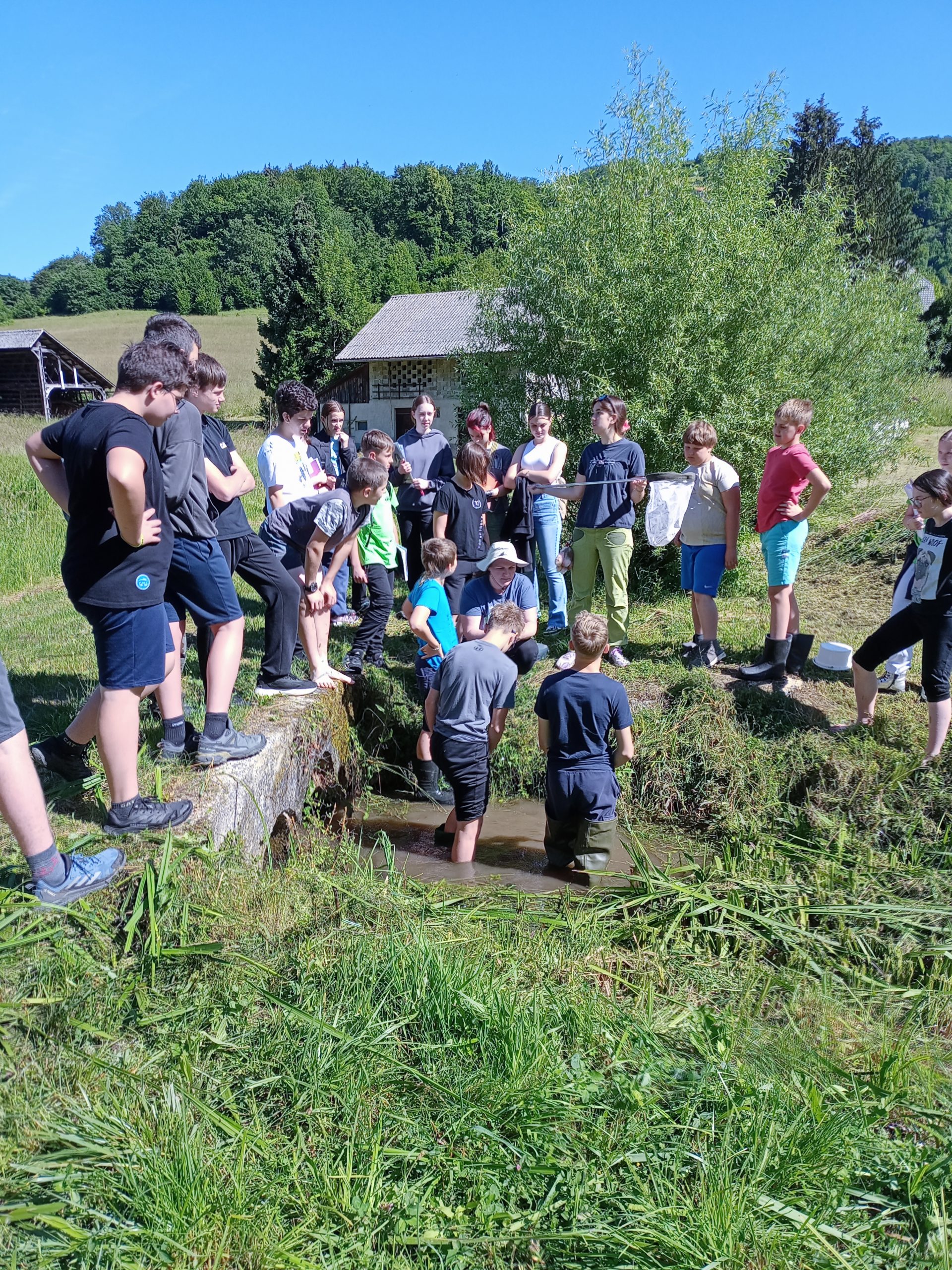
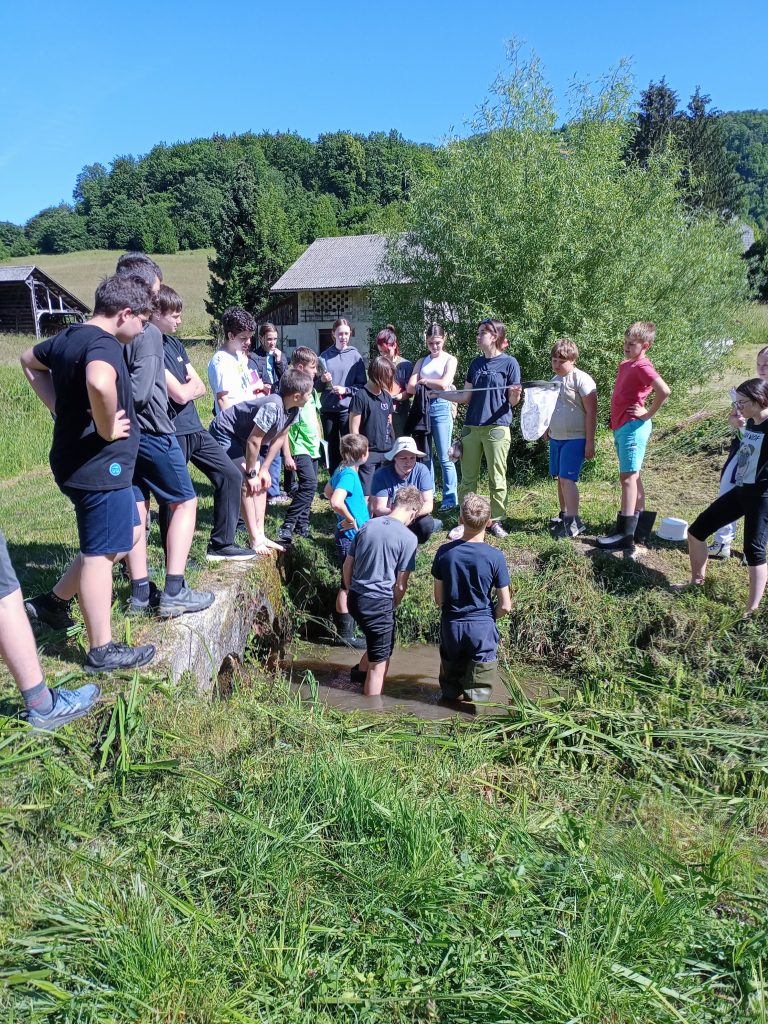
Each workshop is designed as an exploratory adventure in which participants gradually take on the role of young natural scientists. The programme begins with a short or extended introductory discussion, adapted to the age of the group. Together, we reflect on why rivers are important for people and nature, how river processes work, the role of floodplains, how river regulation affects life in rivers, and why healthy freshwater ecosystems are essential for adapting to climate change.
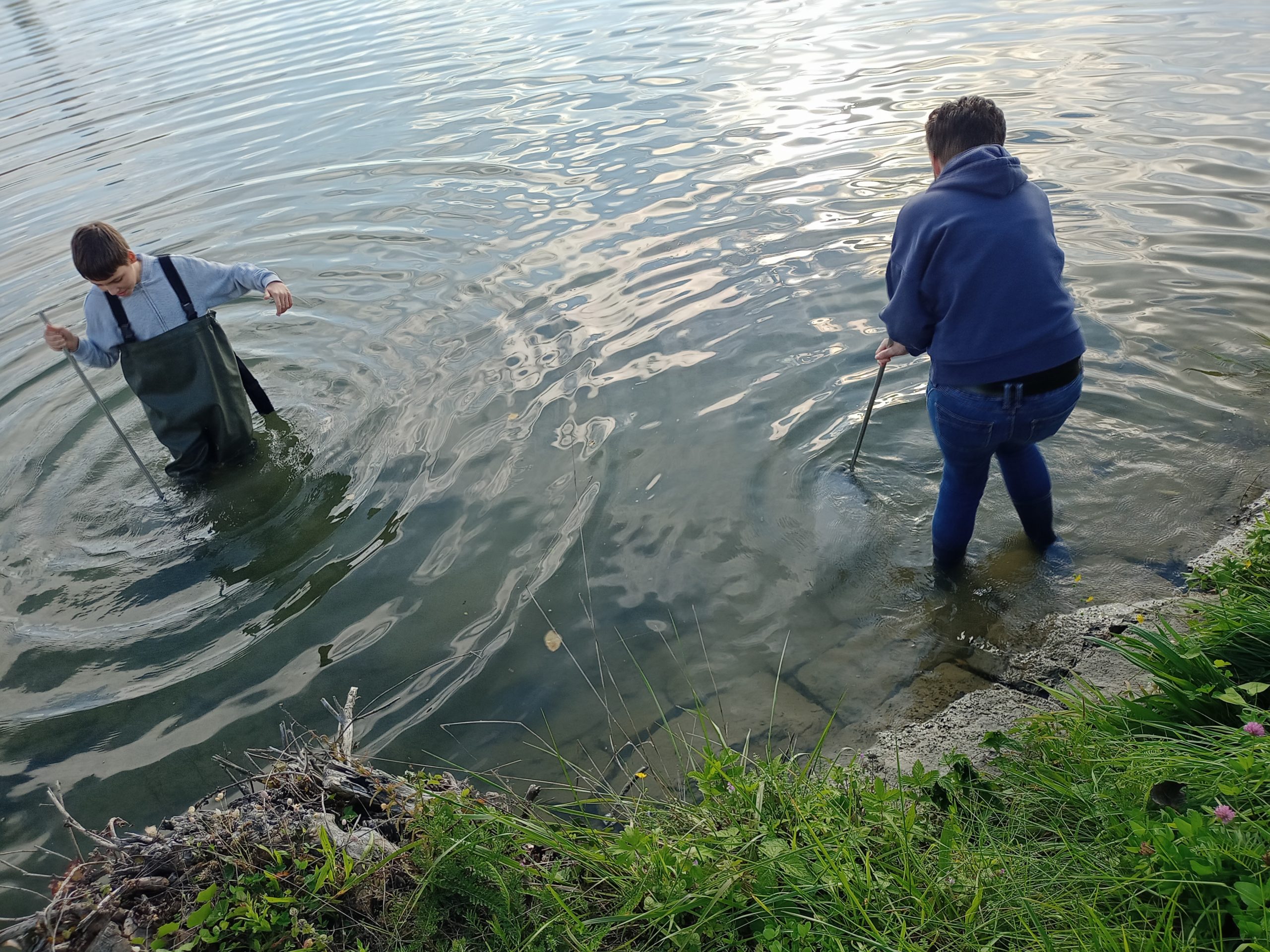
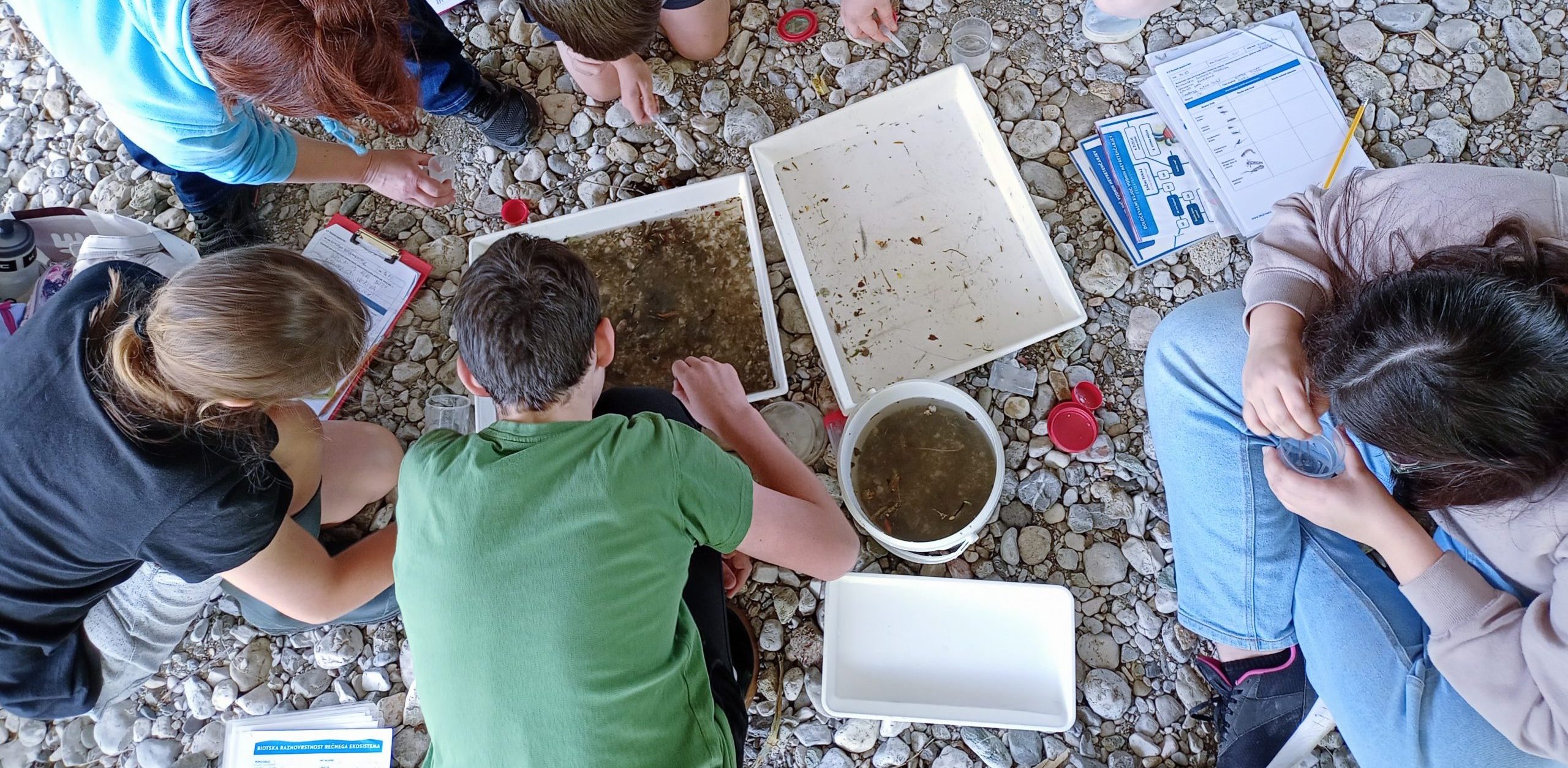
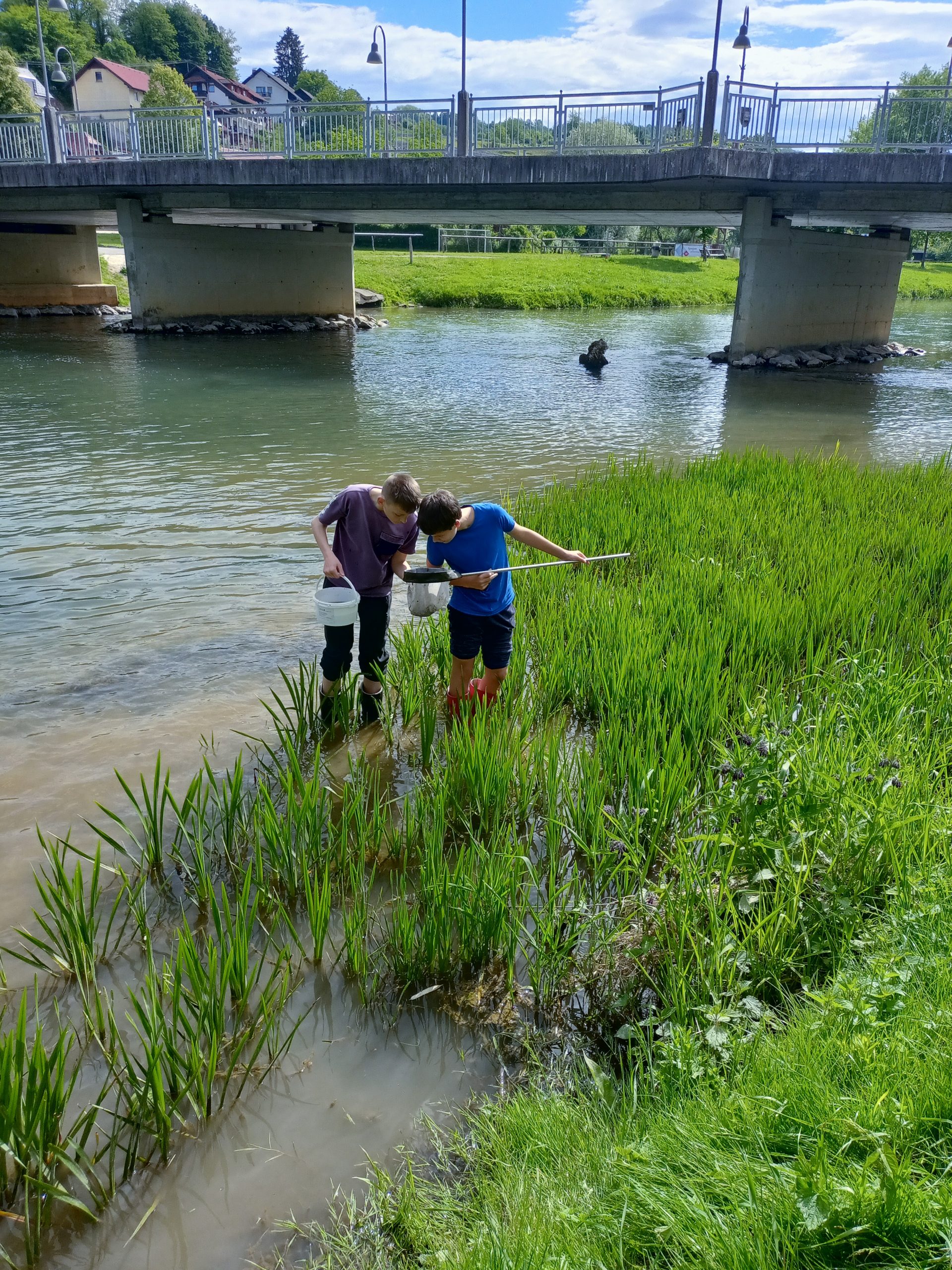
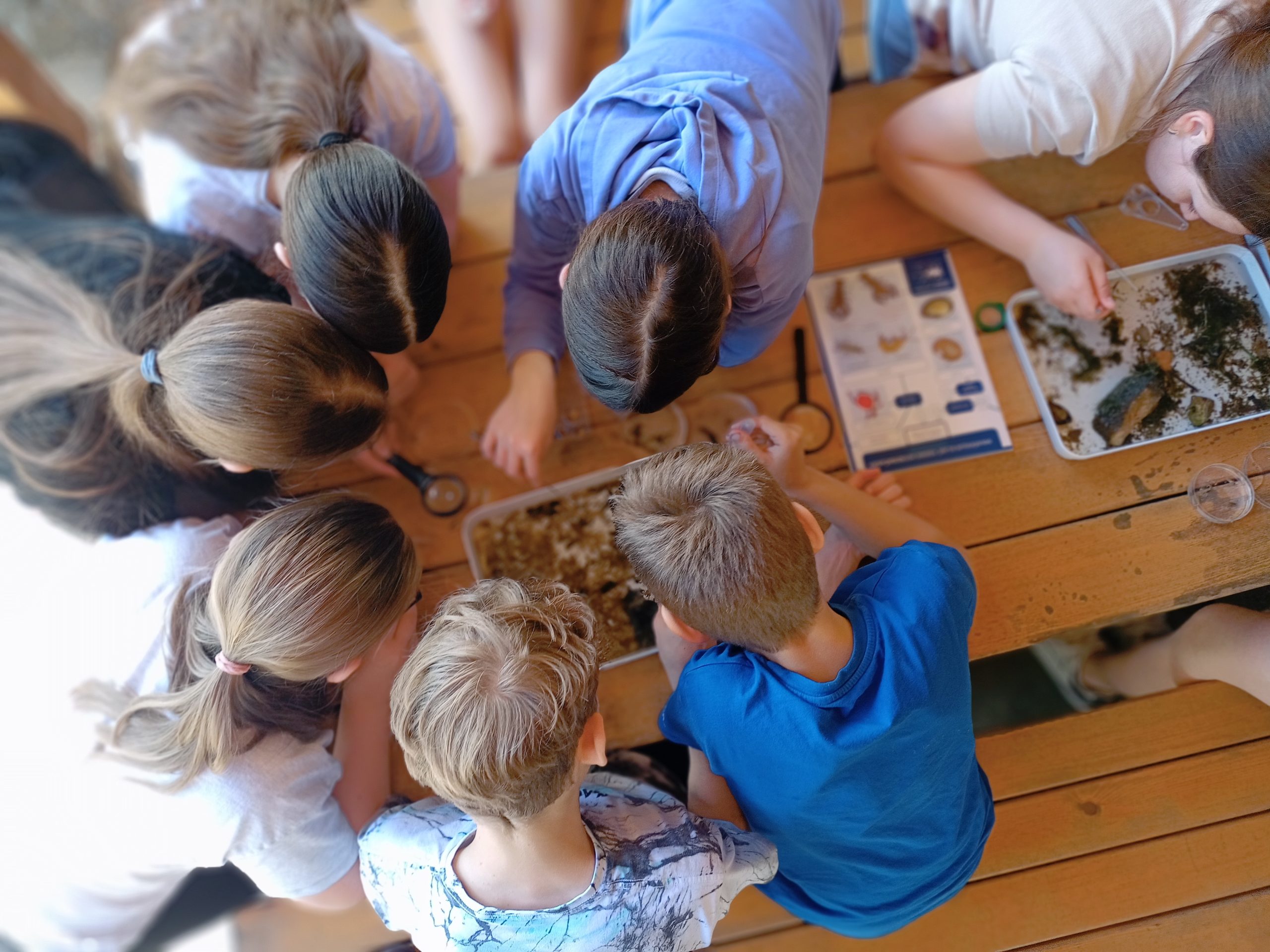
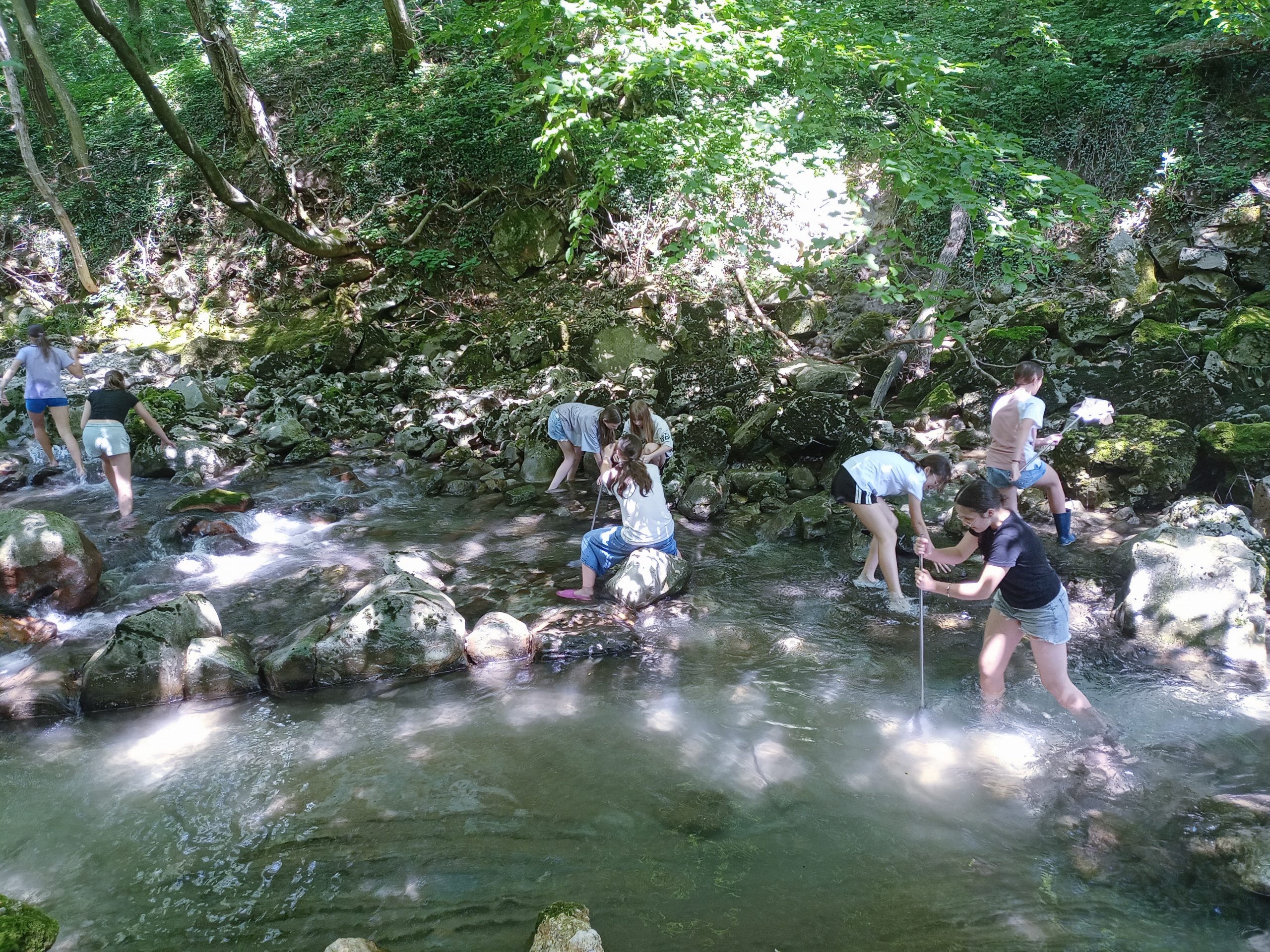
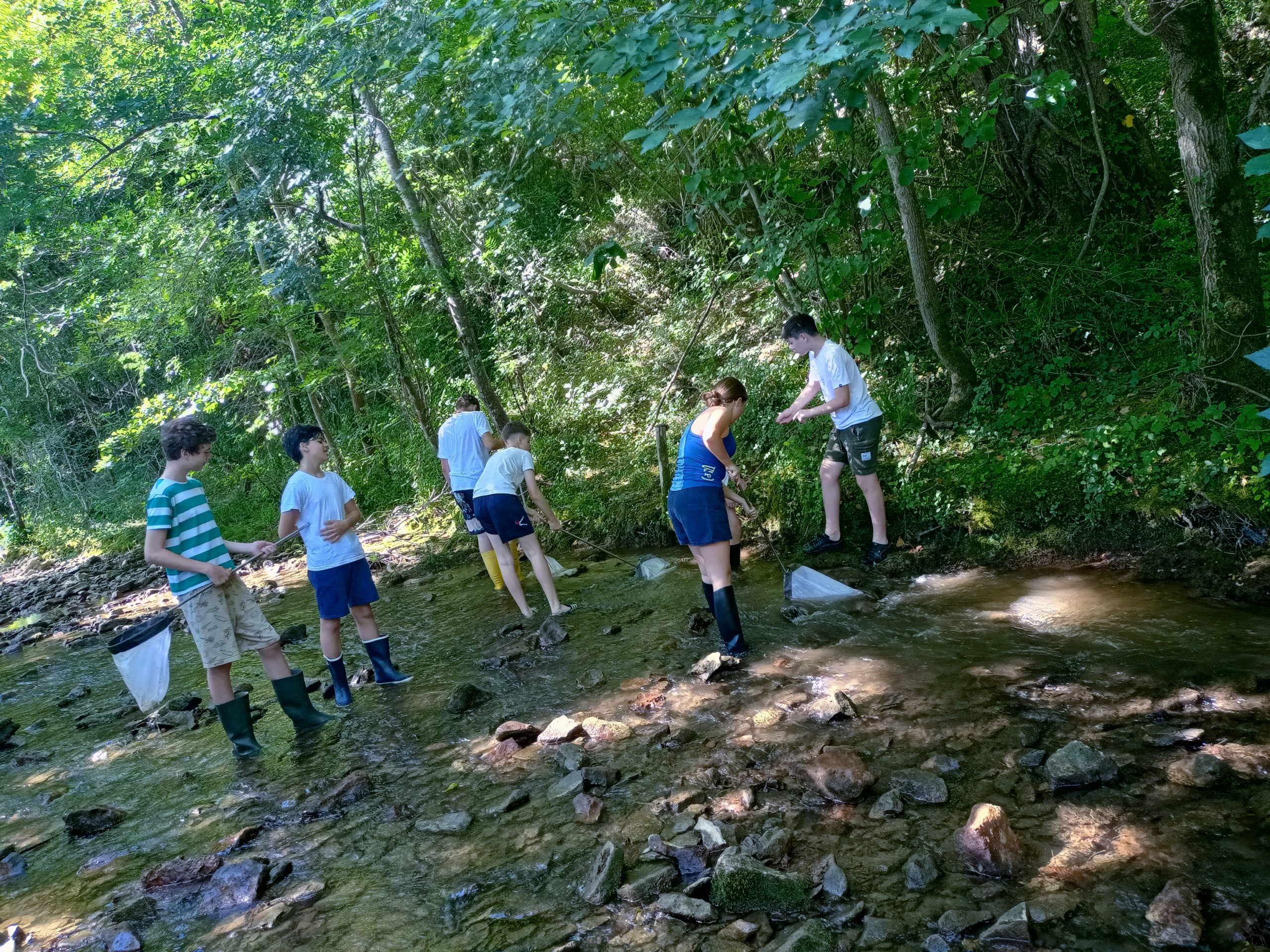
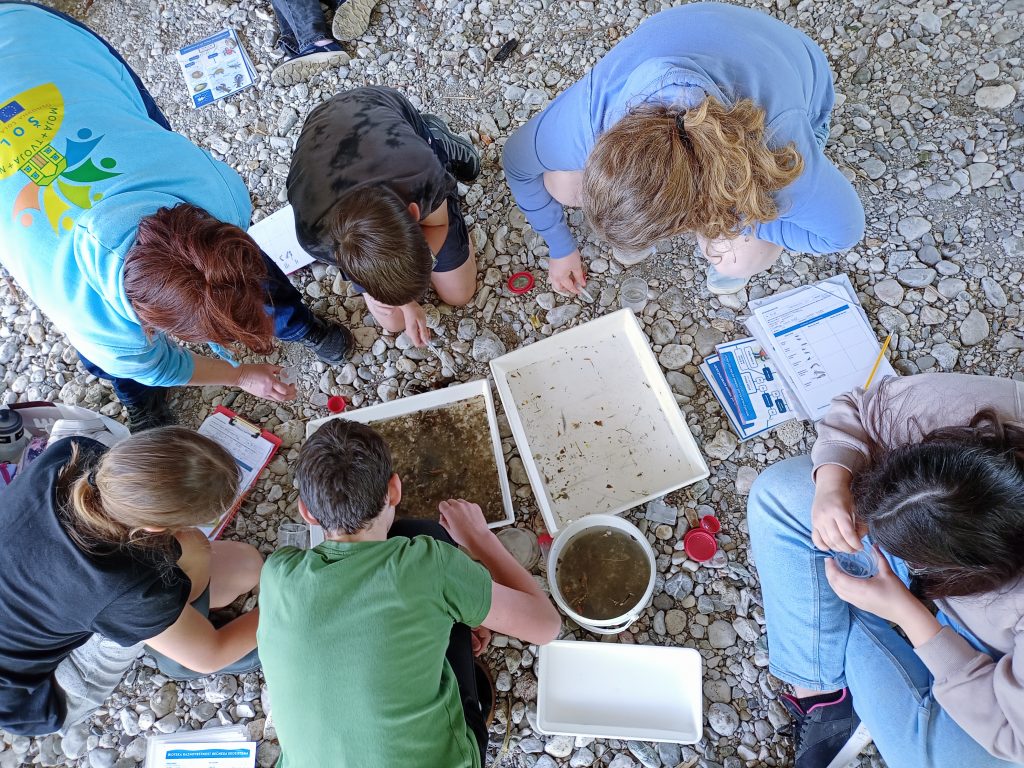
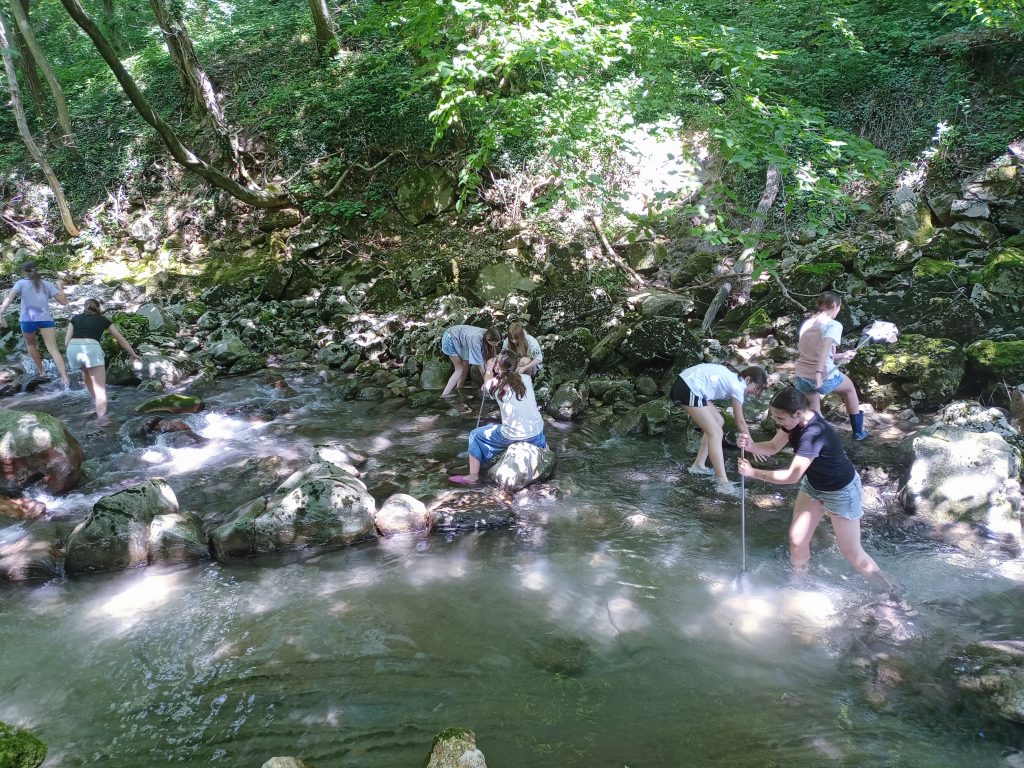
We then head out into the field, where pupils use sampling nets to collect aquatic benthic invertebrates. The organisms they catch are transferred into white trays, where they observe them closely with magnifying glasses, tweezers and identification keys, determining the different groups of organisms. Together, we review which species we found, explore their adaptations to life in water, and discuss how they serve as bioindicators that reveal the ecological condition of the watercourse.
A key part of the workshop is also observing and assessing the watercourse. Participants examine the flow velocity, riverbed type, bank vegetation, shading, the presence of invasive alien plants, and look for signs of human impact. They use all their senses — watching, listening to the sounds of nature, touching different substrates and comparing individual sections of the stream.
We conclude the fieldwork by completing a worksheet that brings together all the findings gathered during the exploration. Participants analyse the sampling results, reflect on water quality, human impacts and the importance of preserving naturally functioning rivers. The worksheet is not merely a knowledge check — it encourages discussion, critical thinking and connecting observations with broader environmental and climate challenges.
When pupils discover for themselves that tiny aquatic organisms tell a story about the river’s health, science becomes a real experience — not just a chapter in a textbook.
EkoAvanture adapt to every school
EkoAvanture do not follow a single, fixed formula. In some schools, we carried out two class periods of exploration along a nearby stream; elsewhere, the workshops became part of a science day, elective modules, extracurricular activities or regular lessons. The programme adapts to the needs of the school, the teachers and the local environment.
Group sizes varied as well. Our largest workshop brought together more than 90 pupils, so the activities were organised through research stations and smaller working groups. On the other end of the spectrum, we also ran a workshop with just six students, which allowed for a much more in‑depth investigation. We could dedicate more time to sampling, identifying aquatic invertebrates and discussing the results and the importance of bioindicators for assessing water quality.
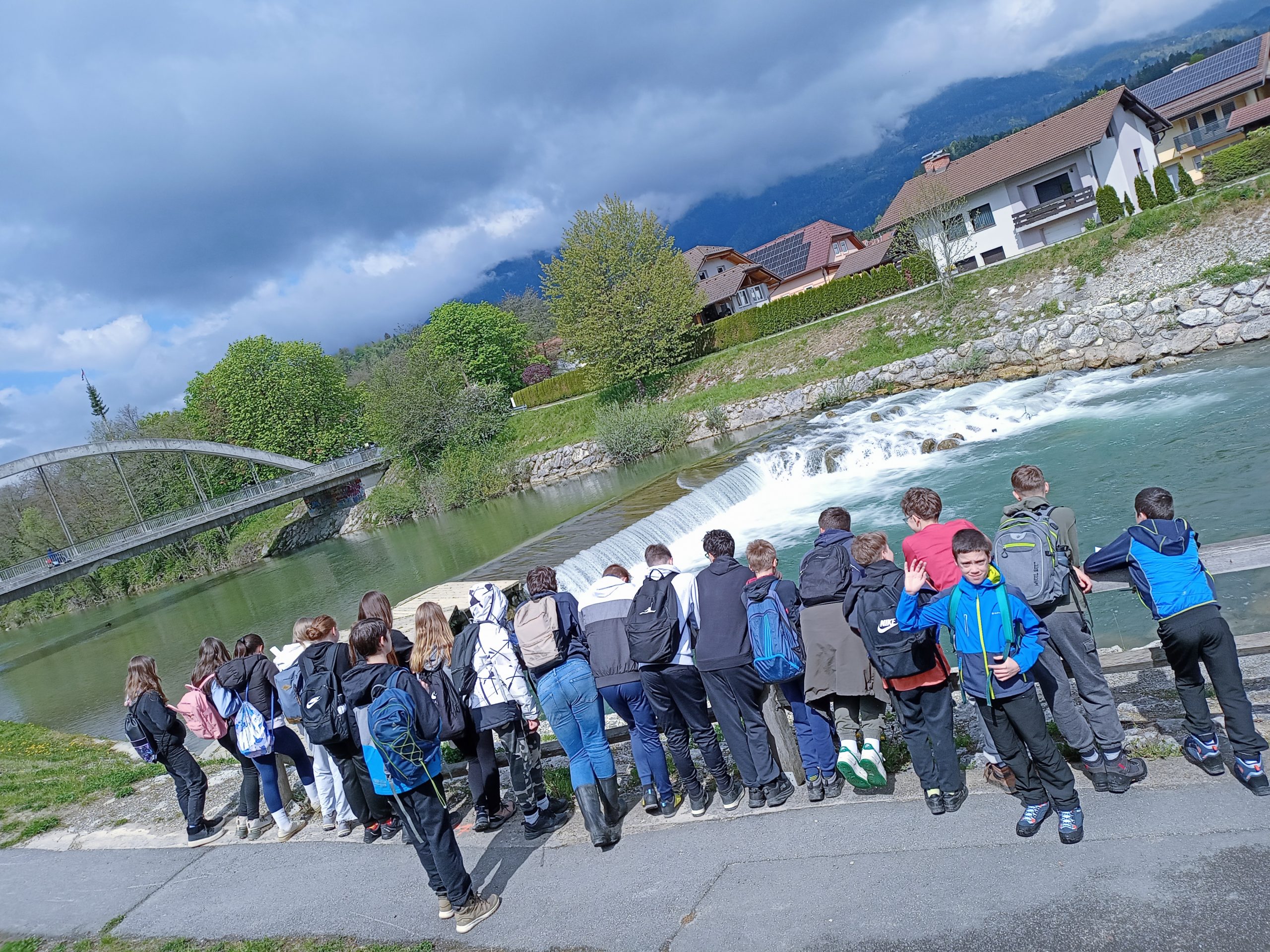
A special value of the programme lies in the fact that we explored local watercourses across almost all of Slovenia. Pupils and students learned about the rivers and streams of their home environment — from the Soča, Dragonja and Hubelj in the Primorska region; the Krka, Rinža and Cerkniščica in Dolenjska and Notranjska; the Ljubljanica, Mali graben and Kamniška Bistrica in central Slovenia; the Savinja, Medija, Brežnica, Gabrovščica and Tršljavec in eastern Slovenia; the Drava and Cirknica in Štajerska; the Kučnica in Prekmurje — and several others. This meant that almost every participant explored a river or stream they encounter in their everyday life, giving the activities even greater meaning.
Along the way, we also discovered the diversity of Slovenian watercourses. Some workshops took place along large rivers with stronger currents, others along small streams with low water levels — each requiring different approaches to exploration. Pupils learned that every watercourse is unique, yet each provides an important habitat for countless organisms.
When a river becomes a classroom (and rubber boots become a competition arena)
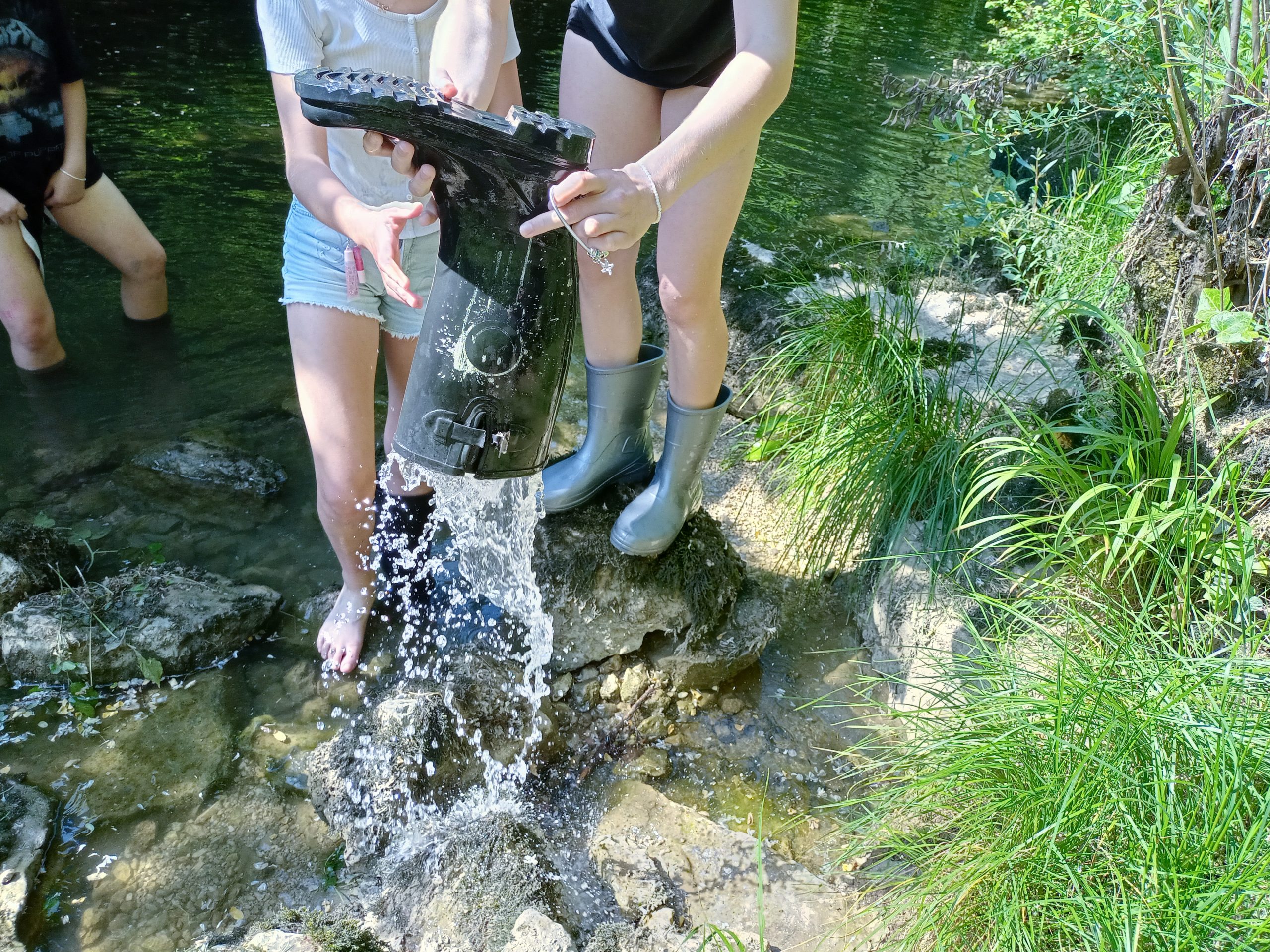
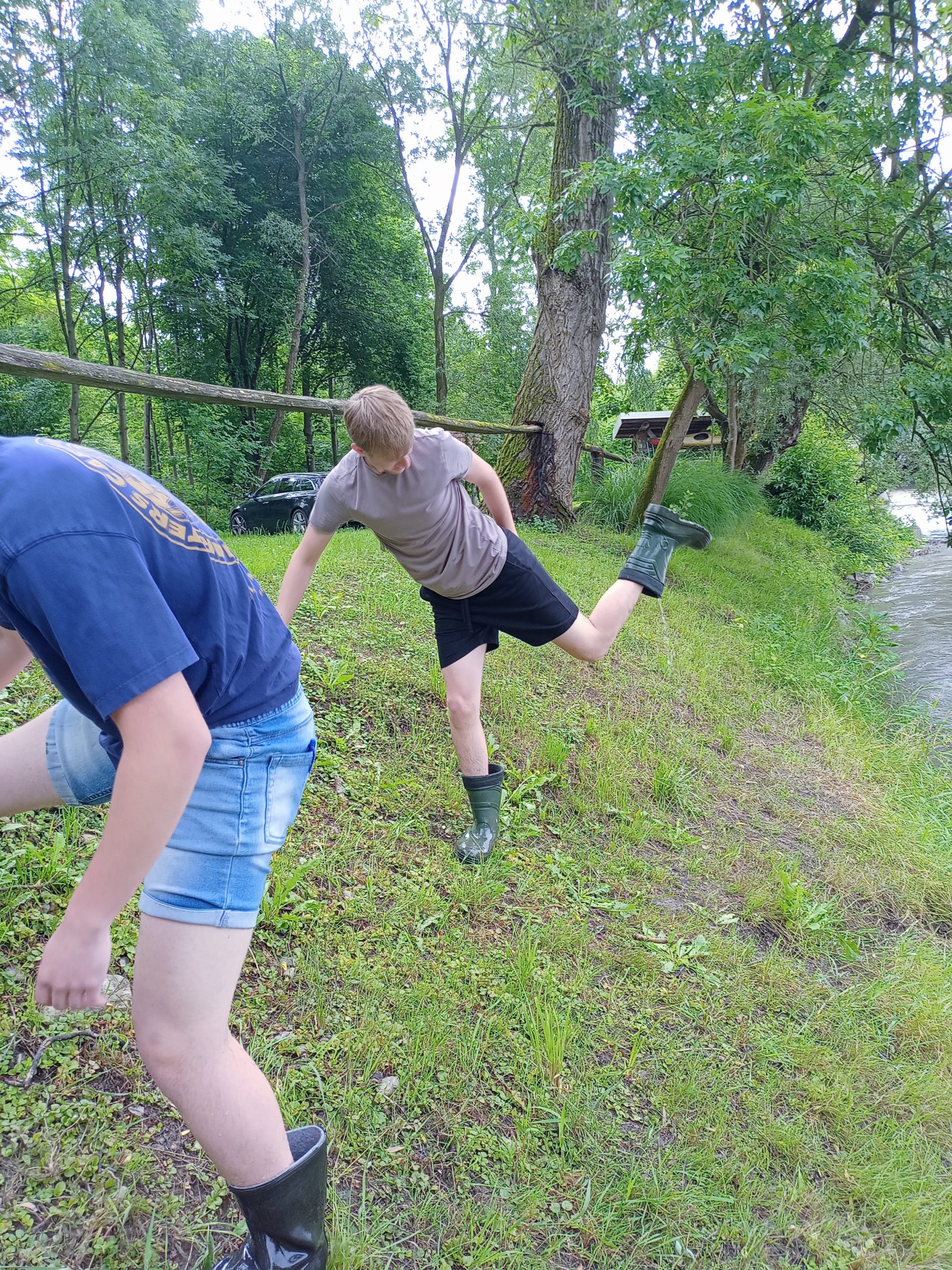
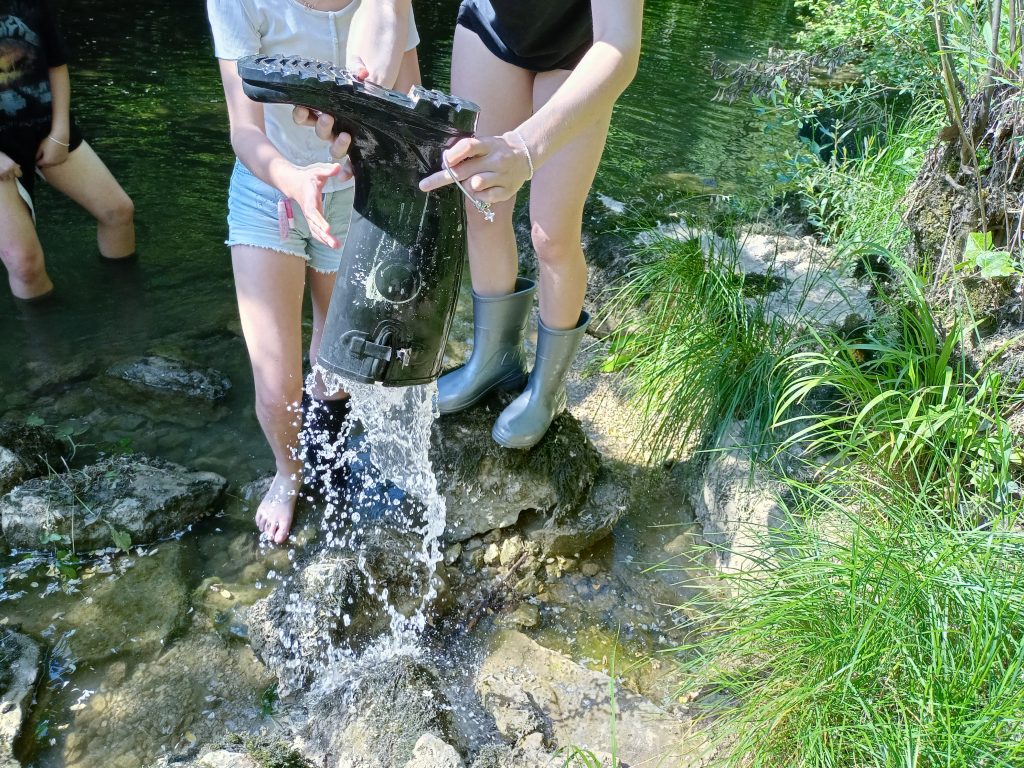
Direct contact with water brought the most excitement and shattered quite a few preconceptions. Workshops often began with a bit of grumbling as pupils changed into rubber boots, but ended with a full‑on “battle for the boots” — once they were in the water, it was hard to get them back out. By the end, the boots were often filled with water, and an unofficial competition quickly emerged among the pupils: who managed to collect the most.
Experiences like these quickly dispel the myth that young people are not interested in learning about nature. They learn with enthusiasm when learning is connected to exploration, personal discovery and direct contact with the environment.
Rain didn’t stop us, and sunshine often tempted someone to accidentally end up in the water. Sometimes the boots were wet, sometimes the trousers, but almost always there were plenty of smiles. Participants went home with curiosity, new knowledge and a different way of looking at rivers.
What excited them most — and what stayed with them the longest?
If pupils were initially most enthusiastic about catching organisms with nets and exploring the underwater world, they were ultimately most surprised by how much life hides in the water — life they had never noticed before.
Feedback from pupils and teachers shows that the biggest points of interest were discovering aquatic organisms, realising that these organisms can reveal water quality, and having the opportunity to conduct independent field research.
The most memorable sentence we heard across Slovenia was:
“It was really interesting. Now I know I will never go to a stream or river in the same way again, because I know what lives in it.”
Teachers emphasised that the workshops successfully connect theory about nature, ecology, climate change and nature‑based solutions with direct experience in the local environment. This helps pupils understand the content more easily, relate it to everyday life and remember it more permanently.
Long‑term effects
One of the most important outcomes of the programme was not only the large number of workshops delivered, but their long‑term impact. Many teachers expressed the wish to include similar exploratory activities in future science days, project days, regular lessons or extracurricular programmes. With the help of training sessions and prepared materials, they will be able to implement the programme independently.
Experiences from the programme showed that learning in nature fosters curiosity, develops an investigative mindset and strengthens a responsible attitude towards water and the environment. Many pupils said after the workshops that they would look at rivers differently from now on — not just as flowing water, but as living ecosystems worth understanding and protecting.
Acknowledgements
A heartfelt thank you to all primary and secondary schools, teachers, pupils and students, university students and project partners who helped shape EkoAvanture.
Nearly a thousand young researchers stepped into rivers this school year, looked beneath the surface and discovered a world they had never noticed before. This is where the true value of the programme lies — in experiences that can change the way we understand and protect our waters.
To ensure that the knowledge and experience gained remain in schools even after the LIFE2RIVERS project ends, the REVIVO Institute will continue the EkoAvanture programme in the next school year. Through the KATIS system, we will organise professional training for teachers, where they will learn methods for field research of watercourses, the use of bioindicators and ways to integrate river‑related content into lessons. In this way, we aim to further strengthen the network of teachers who help young people understand the importance of healthy freshwater ecosystems and inquiry‑based learning in nature.