ALIVE RIVER – Episode 8: The Little Ringed Plover, a Hidden Inhabitant of River Gravel Bars
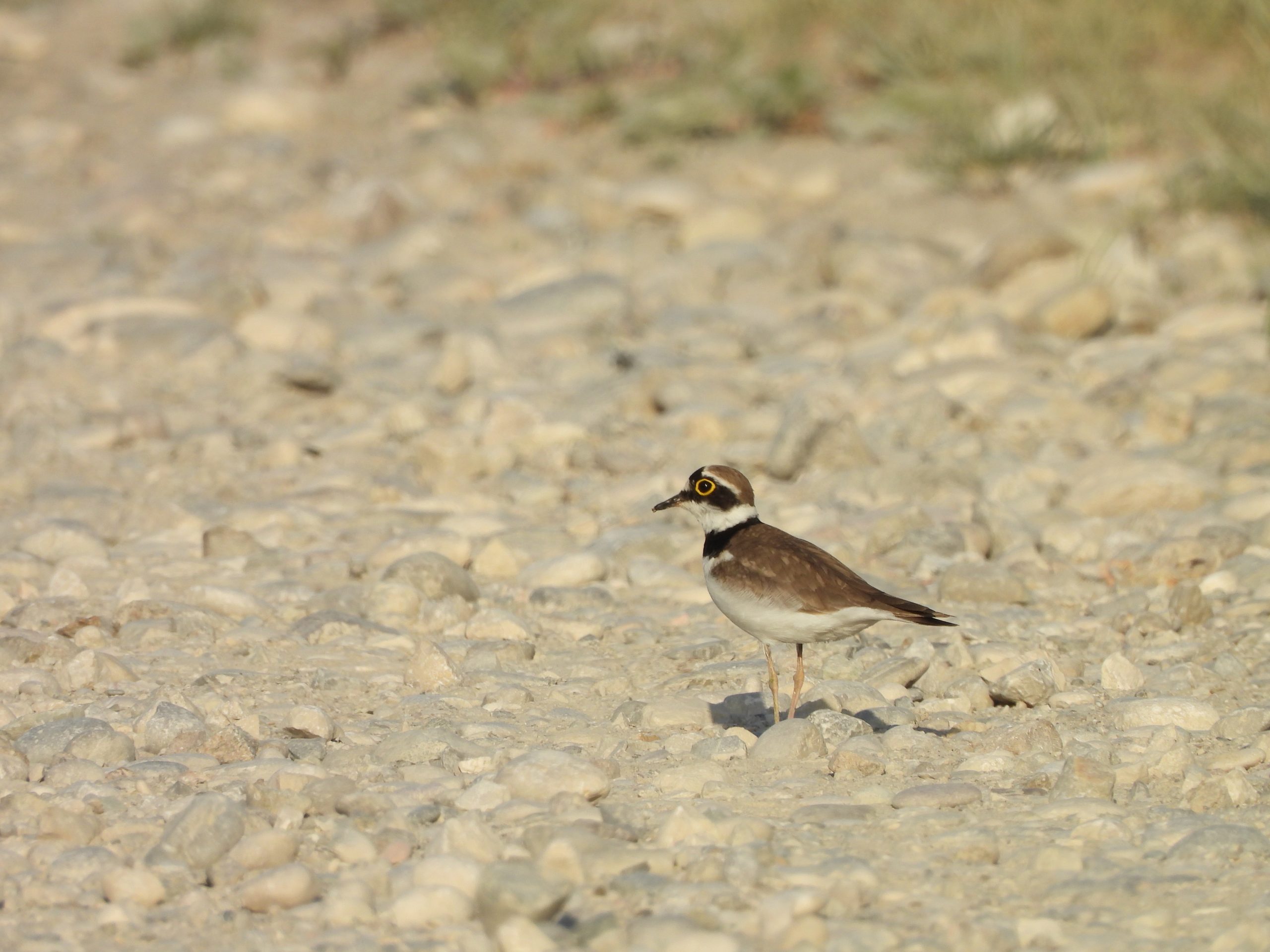
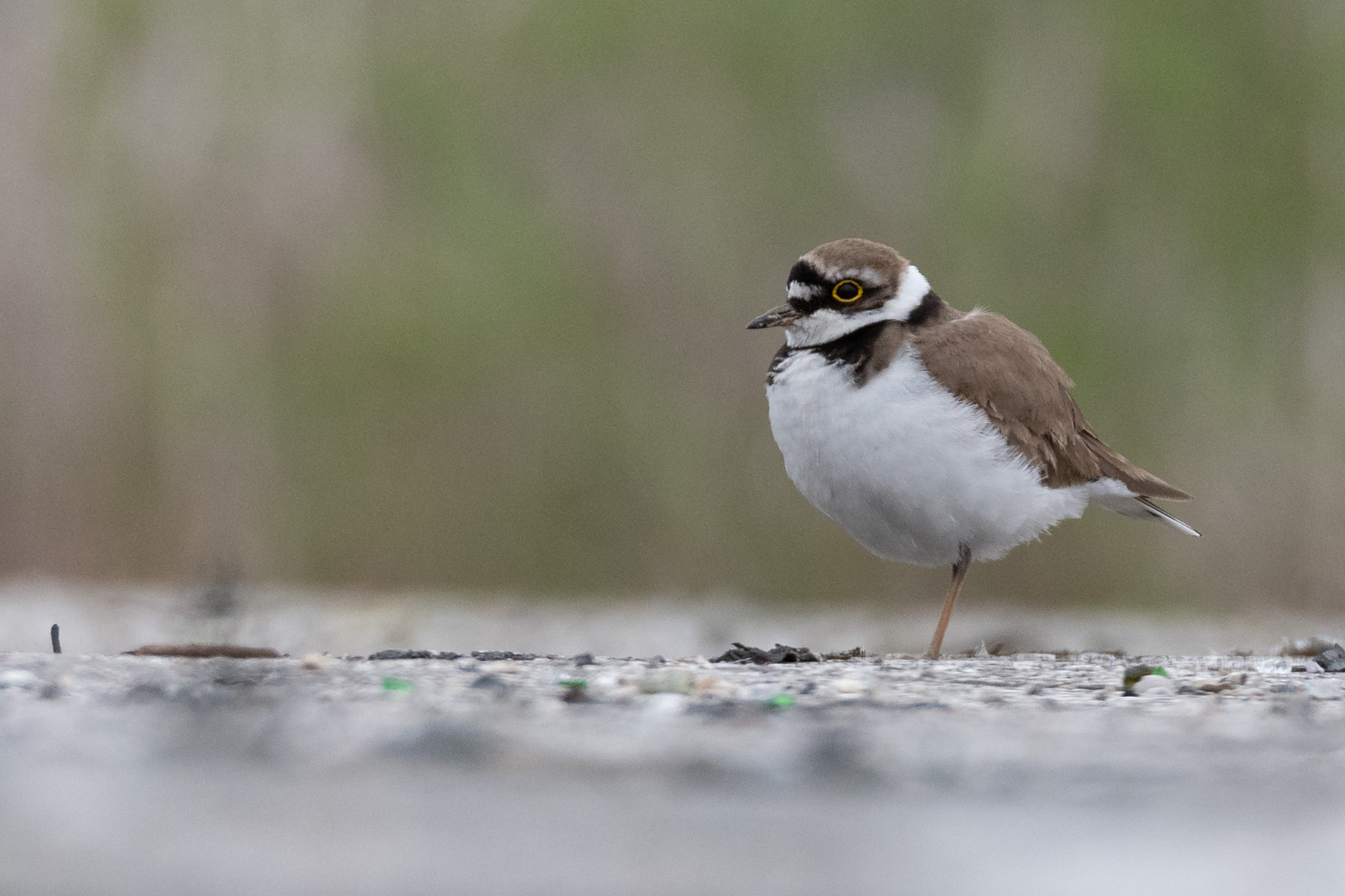
When we spot a small bird darting among the river pebbles, suddenly stopping to pick something up from the ground before quickly scurrying off again, we may have just caught sight of a Little Ringed Plover (Charadrius dubius).
Photo: David Knez
Although small and easily overlooked among the gravel, the Little Ringed Plover is a characteristic inhabitant of natural river gravel bars and tells us far more about the health of a river than we might imagine. Its life is closely intertwined with gravel, sand, shallow waters and the ever-changing dynamics of the river.
It has distinctive white, black and brown plumage that allows it to blend remarkably well into its surroundings among the pebbles and gravel. When standing still, it almost completely disappears against the ground. Its most distinctive feature is the bright yellow eye-ring.
Home Among the Pebbles
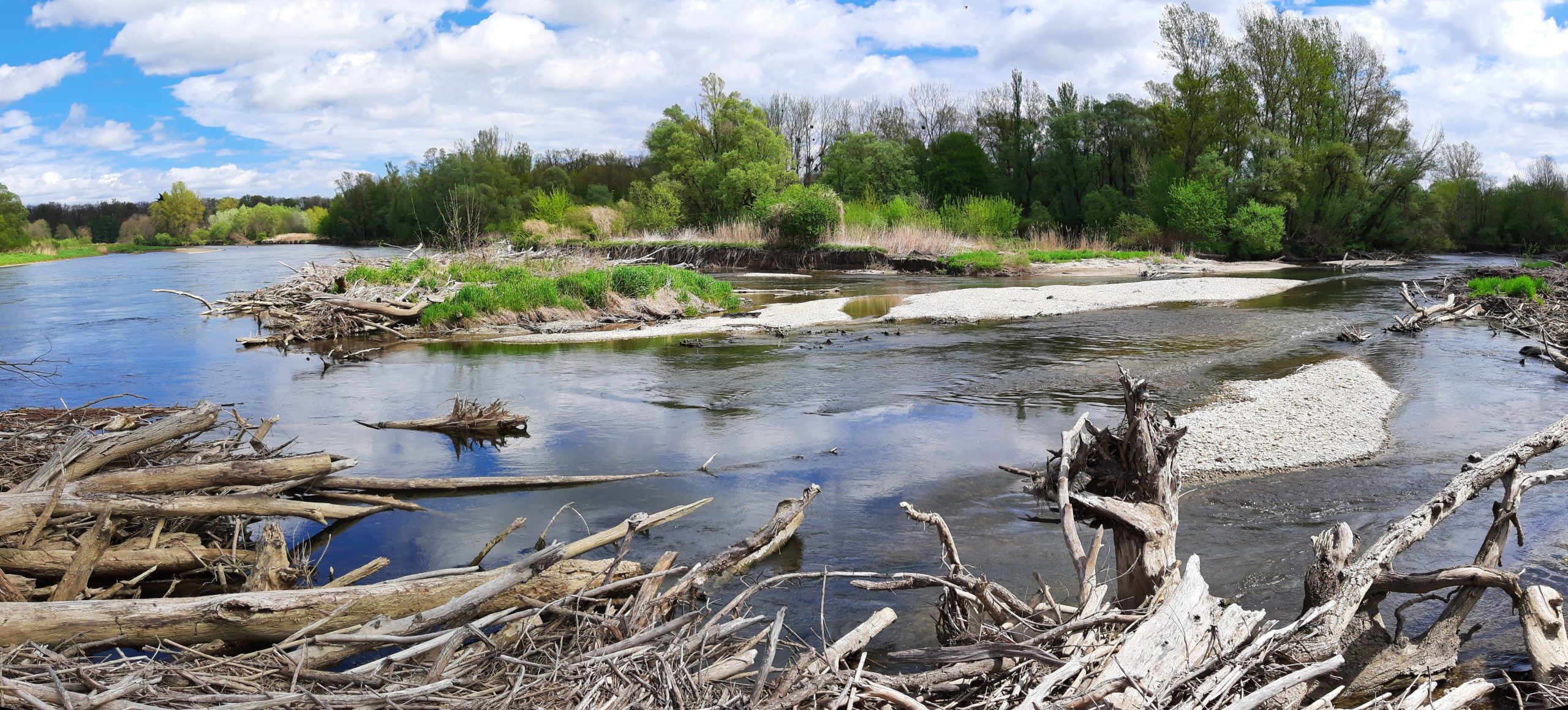
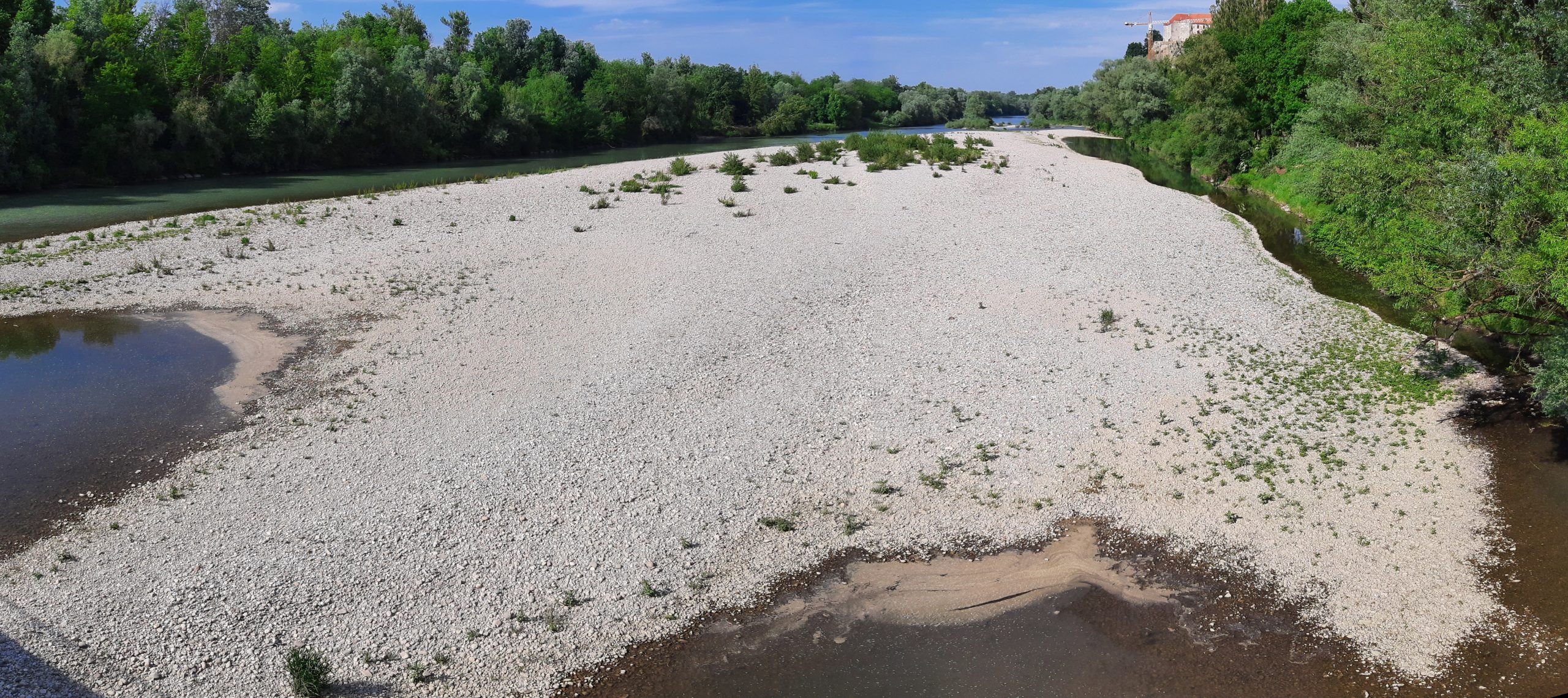
The Little Ringed Plover prefers open gravel and sandy areas, river islands, gravel bars and other exposed riverbank habitats. Such places may seem rather barren to us, but for this small bird they are full of life. Among the pebbles, drift material and along the edges of shallow waters, it finds food, while the open ground provides plenty of space for movement and nesting. These gravelly areas are also essential for its breeding.
The Little Ringed Plover feeds mainly on small invertebrates. As it forages, it carefully explores the ground and the edges of shallow waters, searching for tiny prey, particularly insects and their larvae.
This is why the Little Ringed Plover is so closely connected to the natural dynamics of a river. A natural river is never static. Following heavy rainfall, water levels rise, gravel and sand are carried downstream, new islands emerge and riverbanks are reshaped, leaving behind fresh areas of exposed ground.
These constant changes are essential to the Little Ringed Plover. Newly formed gravel bars can provide ideal conditions for feeding and nesting. Over time, vegetation begins to grow and the habitat gradually changes. During the next high-water event, the river may reshape it once again.
In this way, the river is constantly creating and transforming habitats, sustaining the many species that depend on them.
An Inconspicuous Nest
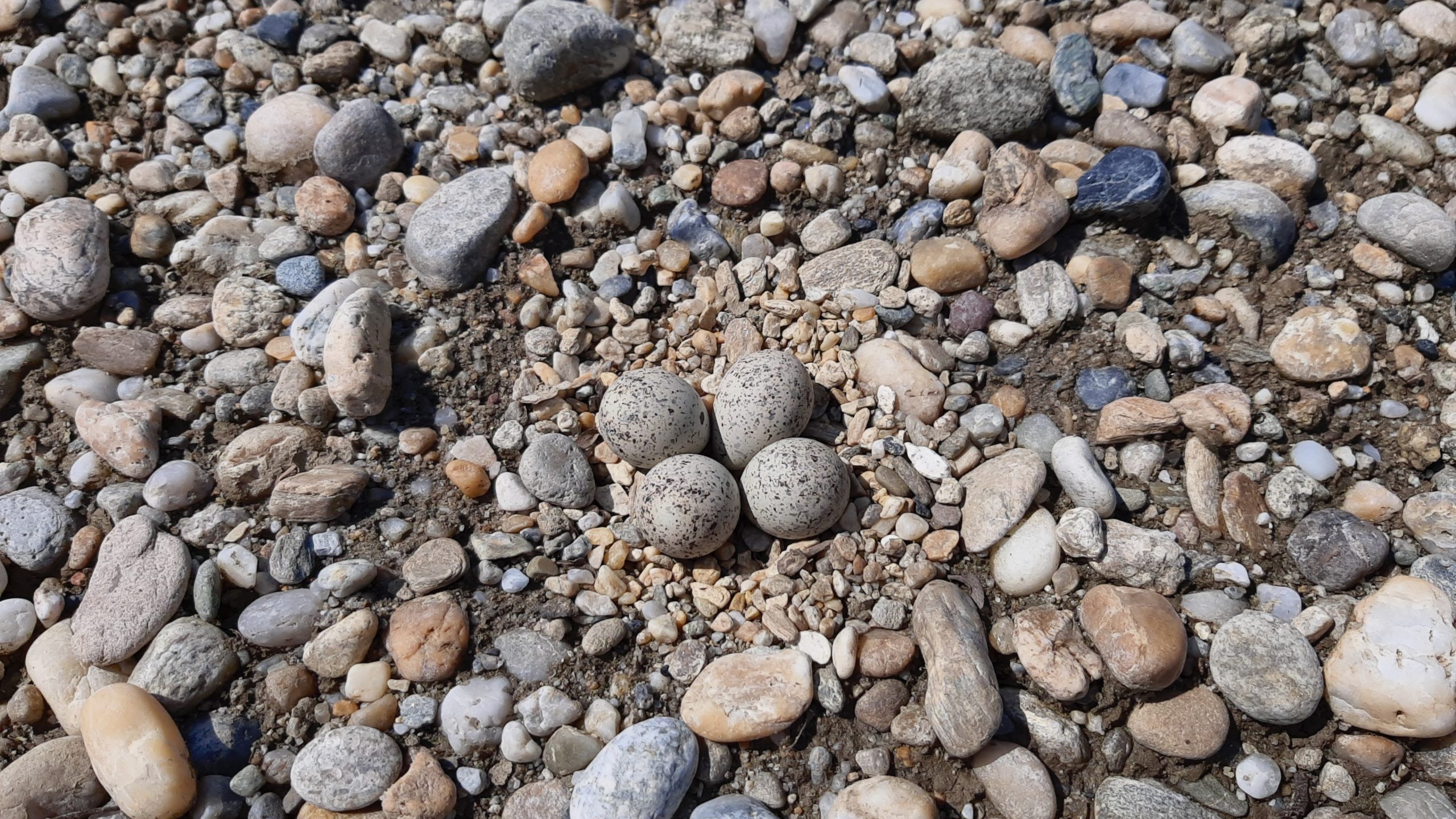
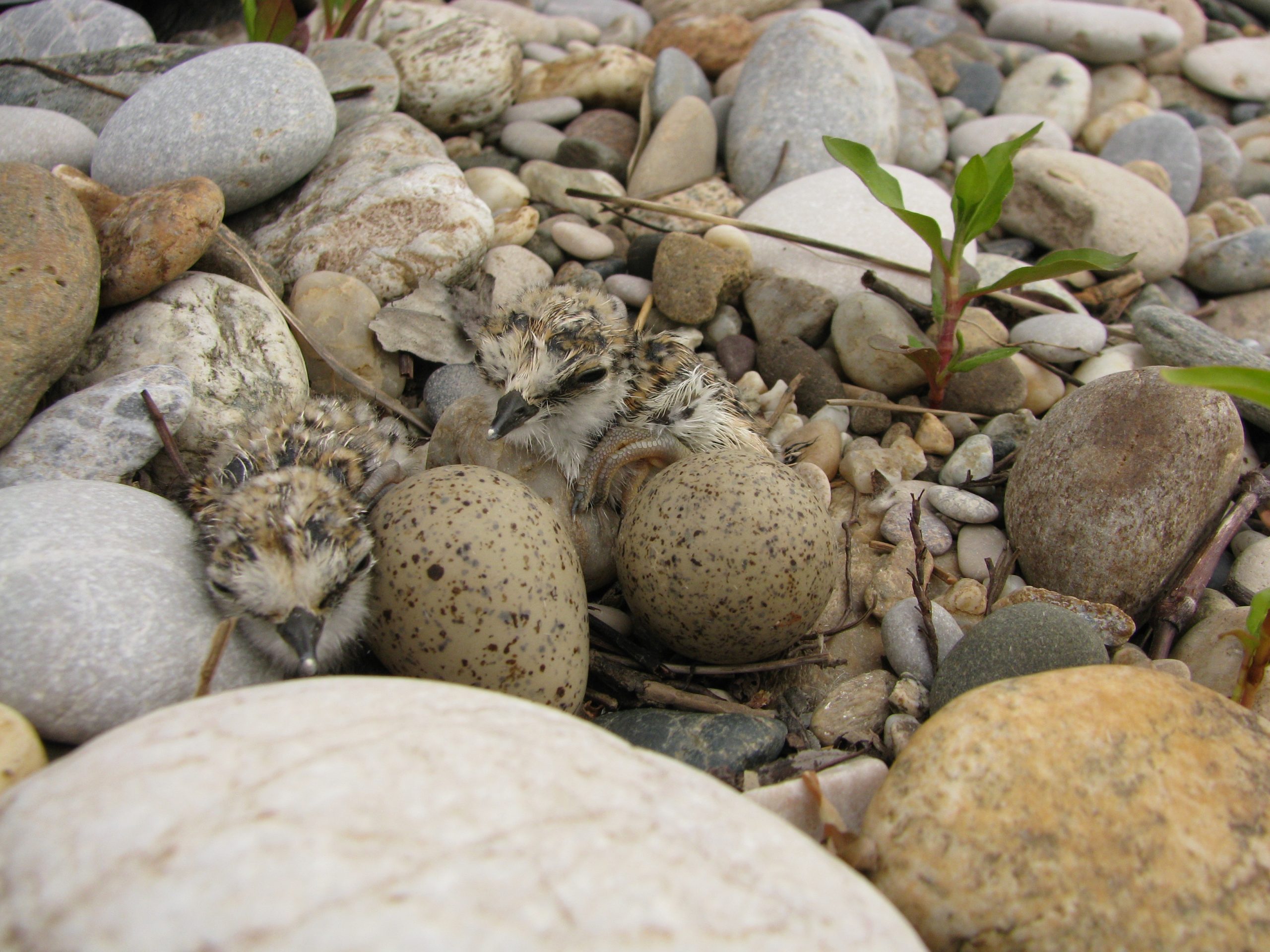
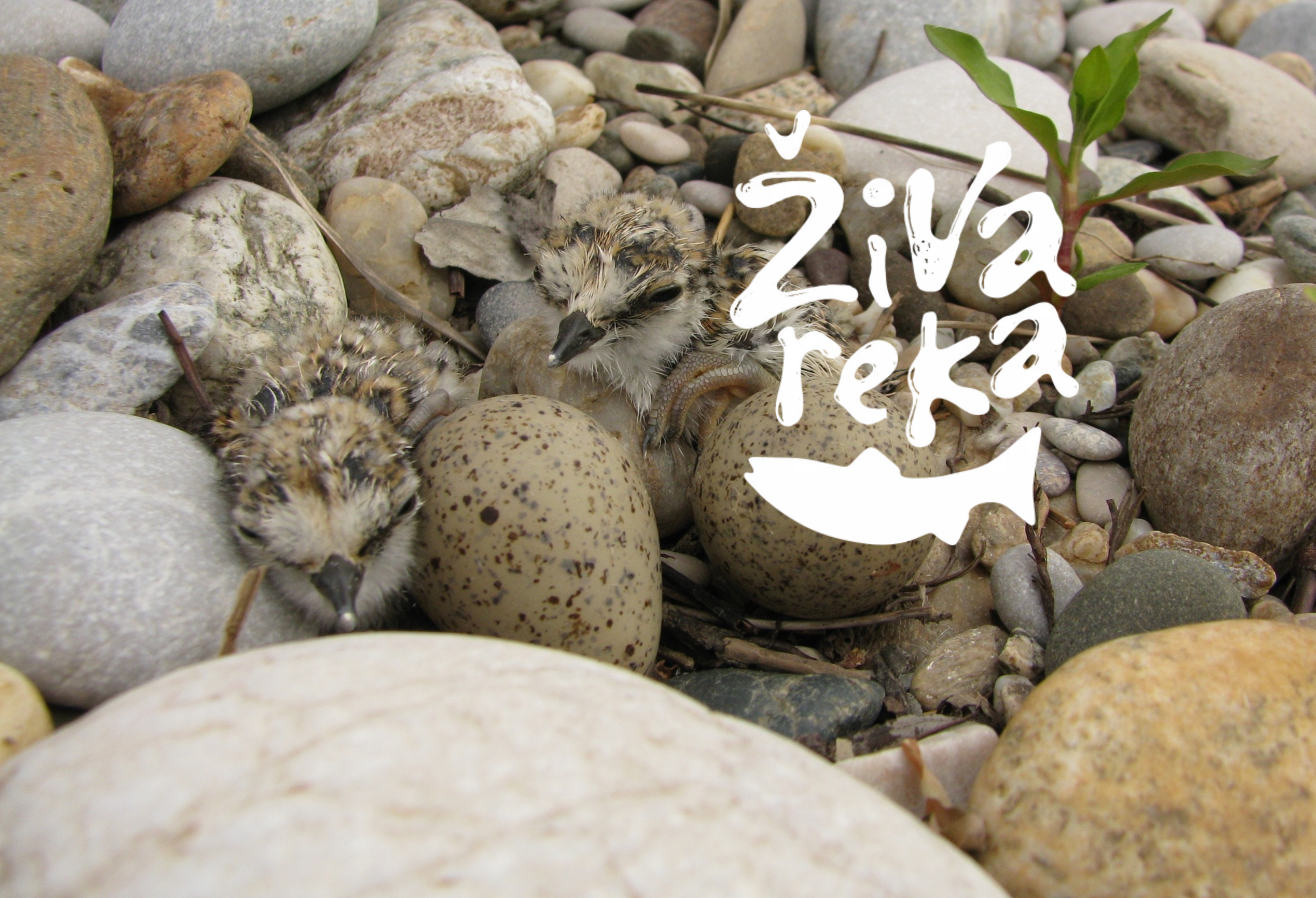
One of the most fascinating aspects of the Little Ringed Plover is its nesting behaviour. Rather than building a large, conspicuous nest, it chooses a simple, shallow scrape in the ground, often among the pebbles. It usually lays four speckled eggs, whose colouring closely resembles the surrounding gravel, making them exceptionally difficult to spot.
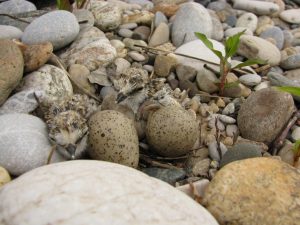
Photo: Monika Podgorelec
When someone gets too close, the Little Ringed Plover does not attack. Instead, it puts on its well-known act: it starts “limping”, droops its wings and pretends to be injured. In doing so, it lures the potential predator away from its nest and eggs. Once the danger has passed, it returns and disappears among the pebbles once again.
Long Journey to Africa and Back
As summer draws to a close, the Little Ringed Plover sets off on its long journey to northern and western Africa, where it spends the winter along rivers, lagoons and wetlands. In spring, it returns to Europe’s gravel bars, with some birds even returning to the same patches where they nested in previous years.
Across Europe, the Little Ringed Plover is found throughout most of the continent, with the exception of the far north and the north-western islands. In Slovenia, it occurs mainly along the lowland stretches of larger gravel-bed rivers, but can also be found locally elsewhere in lowland areas and basins, as well as in coastal wetlands. The largest number of breeding pairs is found in the eastern part of the country.
Why Are Gravel Bars So Important?
A gravel bar may look like nothing more than an ordinary pile of stones. In reality, however, it can be a highly important habitat. A single river gravel bar can support a wide range of ecological processes and provide a home for plants, insects, spiders, amphibians, reptiles and birds. Among them is the Little Ringed Plover.
The Little Ringed Plover is a kind of living indicator. If we find it along a river, it is likely that natural processes are still at work there: the movement of gravel, the formation of new gravel bars and the free flow of water. If it disappears, the river dynamics that sustained its habitat have often disappeared too. And with the plover, we lose many other species that depend on these gravel bars.
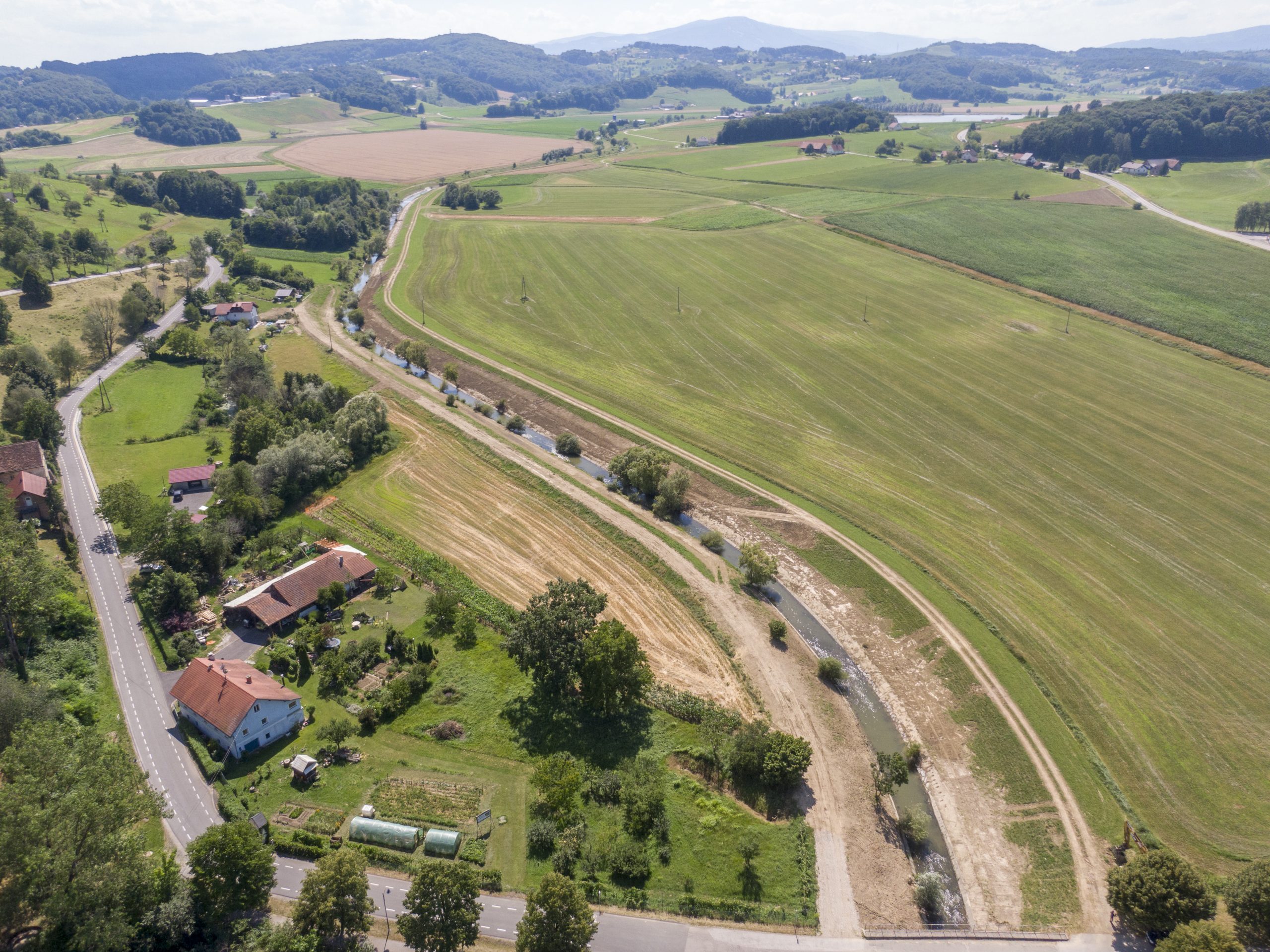
When we heavily modify a river, reinforce its banks or remove its natural gravel areas, these habitats can be lost. This is why preserving natural gravel bars is important not only for the beauty of river landscapes, but also for the many species that depend on these unique habitats.
How to Observe It Without Disturbing It?
When walking along rivers in spring and early summer, during the birds’ breeding season, be mindful of where you step. Their nests are so well camouflaged that they can easily be trampled by accident. If you notice a bird “limping” or calling loudly, slowly move away, as you are probably too close to its nest. During this period, dogs should be kept on a lead on gravel bars. The best way to observe these birds is from a distance, using binoculars, and allowing them to go about their lives undisturbed.
Sources: https://svetpticnrp.splet.arnes.si/2025/04/25/mali-dezevnik/;Koce U. Gnezditvena ekologija malega deževnika v Ljubljanski kotlini. Dipl. delo., Ljubljana, Univ. v Ljubljani, Biotehniška fakulteta, Oddelek za biologijo, 2005; https://ptice.si/ptice-in-ljudje/ptice-slovenije/pobrezniki/;DOPPS – BirdLife Slovenija:Atlas ptic Slovenije, Popis gnezdilk 2002–2017, str. 172