ALIVE RIVE – Episode 1: Balkan Goldenring
Introducing our new feature, “Alive River”
“Alive River” is a feature in which we introduce the animal and plant species, as well as the natural processes, that help create the rich and diverse world of our rivers. From tiny aquatic invertebrates and remarkable fish to birds that watch over riverbanks, and all the creatures whose life cycles are closely connected to water.
Each feature reveals why these species and processes are important for the health of river ecosystems, why they are good indicators of natural balance, and how protecting rivers also helps ensure their survival.
The feature invites us to look at rivers with new eyes – as living, diverse ecosystems where every species has its own story to tell.
Episode 1 – BALKAN GOLDENRING
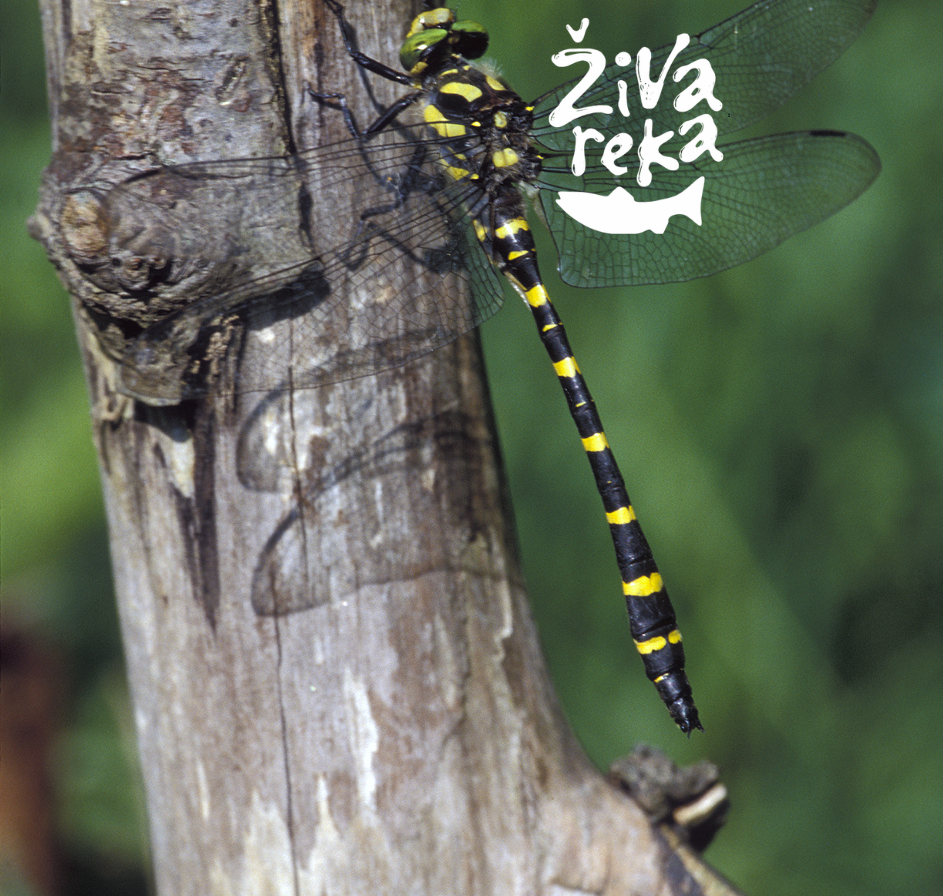
The Balkan goldenring (Cordulegaster heros) is the largest dragonfly species in Europe and one of the most characteristic species of forest streams in Slovenia. It is an endemic European species. Its distribution covers central and southern Europe, ranging from the Czech Republic through Austria and Slovenia all the way to Greece.
Habitat and ecology
The Balkan goldenring inhabits clean, natural forest streams with narrow channels and sandy or slightly muddy bottoms. These streams are often seasonal and may dry up completely during the summer. However, the larvae survive periods of drought by burrowing deeper into the substrate. The larval development lasts between three and five years, which means that the species is highly dependent on stable, uninterrupted natural processes within the watercourse. Adult individuals are active from June to August.
The Balkan goldenring is a fast and agile predator that feeds on smaller animals. In doing so, it helps regulate the populations of other insect species within the ecosystem. Although its adult coloration may appear warning-like, it actually helps the dragonfly remain concealed in the shade beneath the forest canopy, protecting it from larger predators.
Threats and conservation measures
The Balkan goldenring is sensitive to:
- channel regulation and modification,
- the removal of riparian vegetation,
- pollution and changes in the water regime,
- excessive intervention in forest streams.
In Slovenia, the species is listed as Vulnerable (V) on the Red List of threatened species. Due to its conservation importance, it is also included among the species protected under the Natura 2000 network.
Its presence is an important indicator of well-preserved forest streams, as it can thrive only where aquatic and riparian ecosystems have retained their natural characteristics.
By protecting its habitat, we are not only preserving one remarkable dragonfly species, but also entire communities of organisms that depend on clean, naturally functioning watercourses.gova prisotnost je pomemben pokazatelj dobro ohranjenih gozdnih potokov, saj lahko uspeva le tam, kjer so vodni in obvodni ekosistemi ohranili svoje naravne značilnosti. Z varovanjem njegovega življenjskega prostora ne ohranjamo le ene izjemne vrste kačjega pastirja, temveč celotne združbe organizmov, ki so odvisne od čistih, naravno delujočih vodotokov.
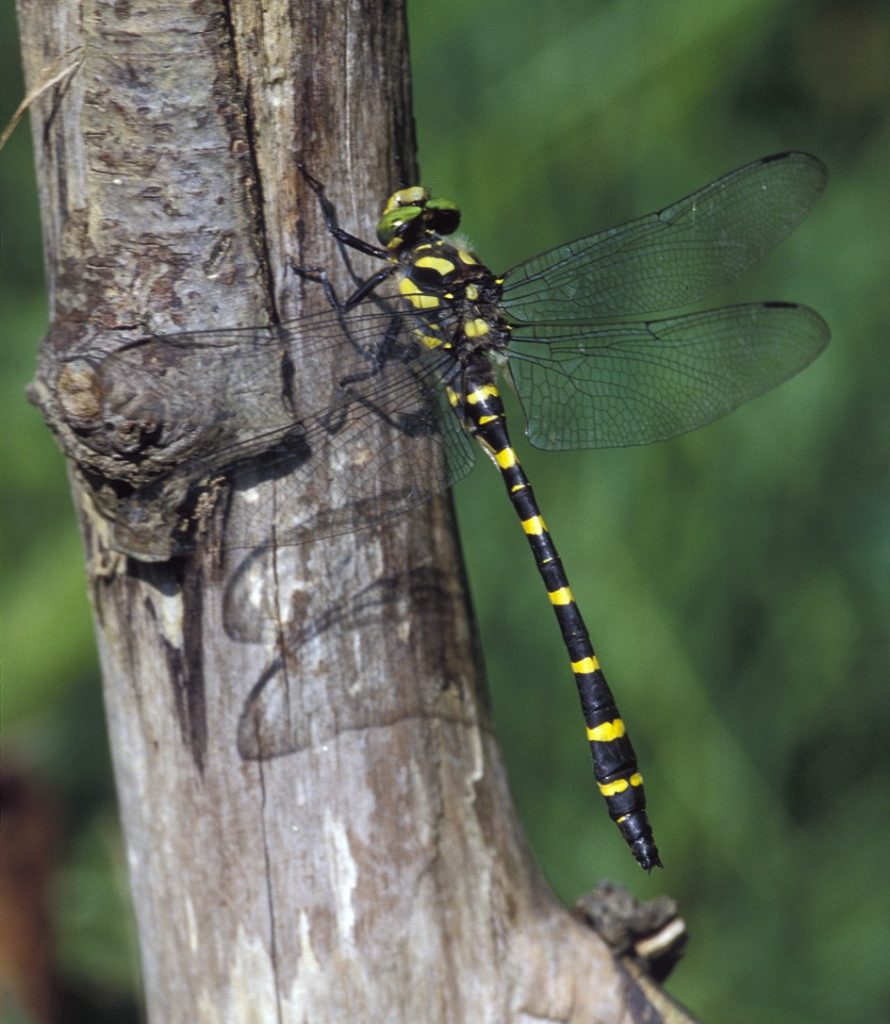
Photo: Matjaž Bedjanič
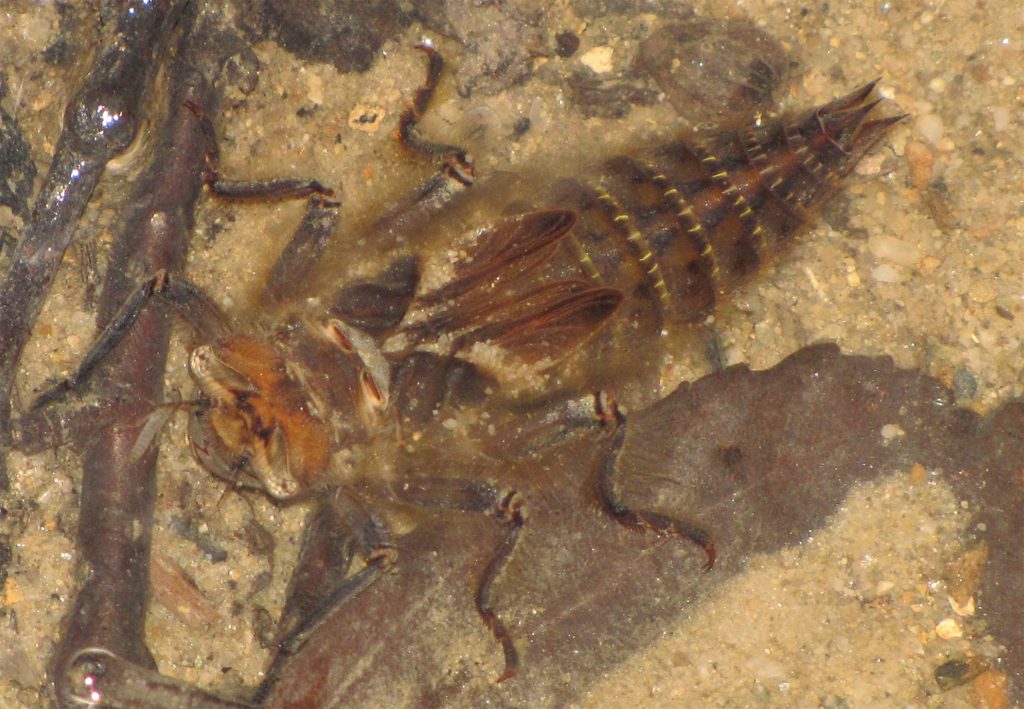
Photo: Matjaž Bedjanič