Presentation at the “Dovolj za vse” Conference
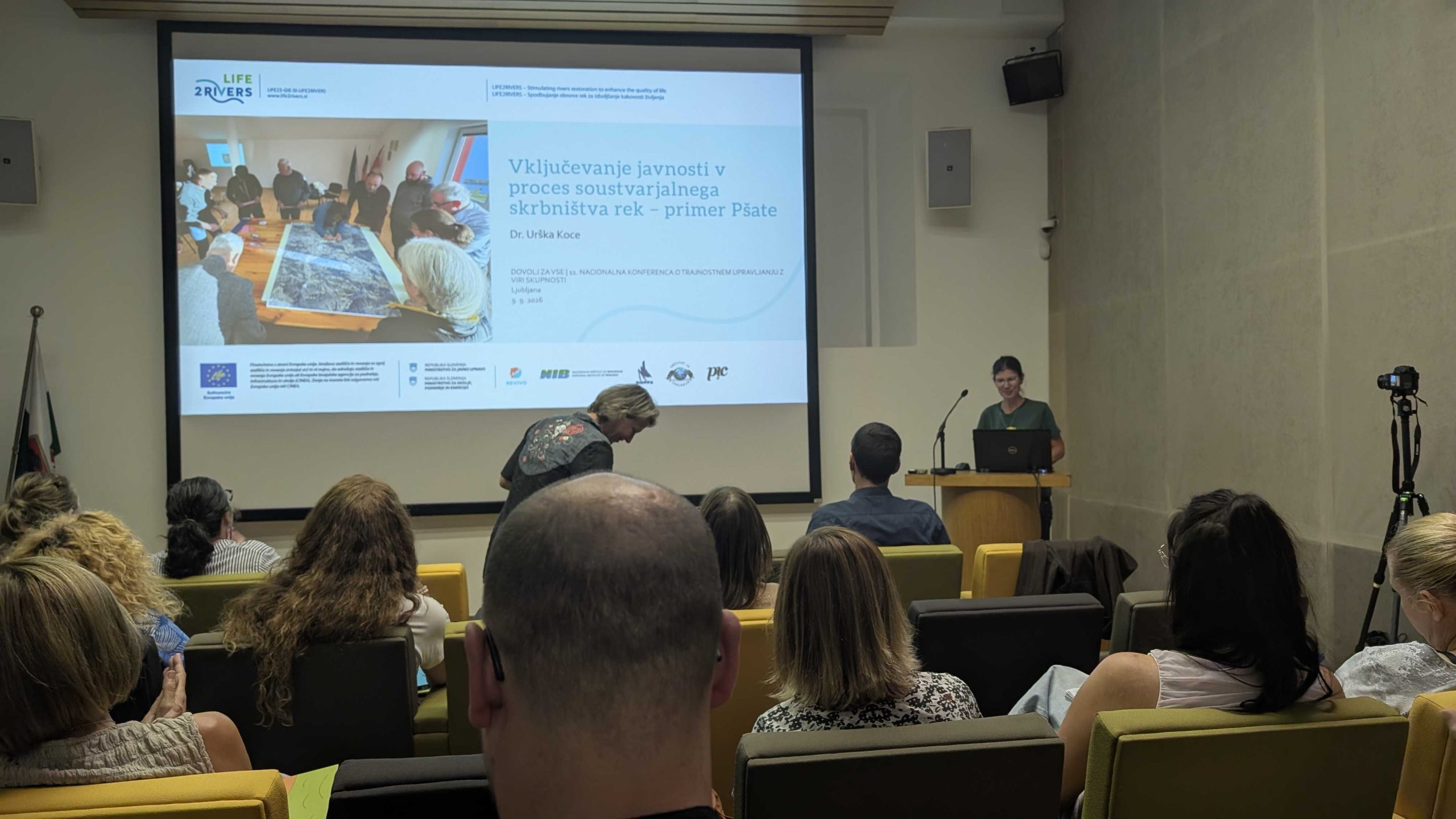
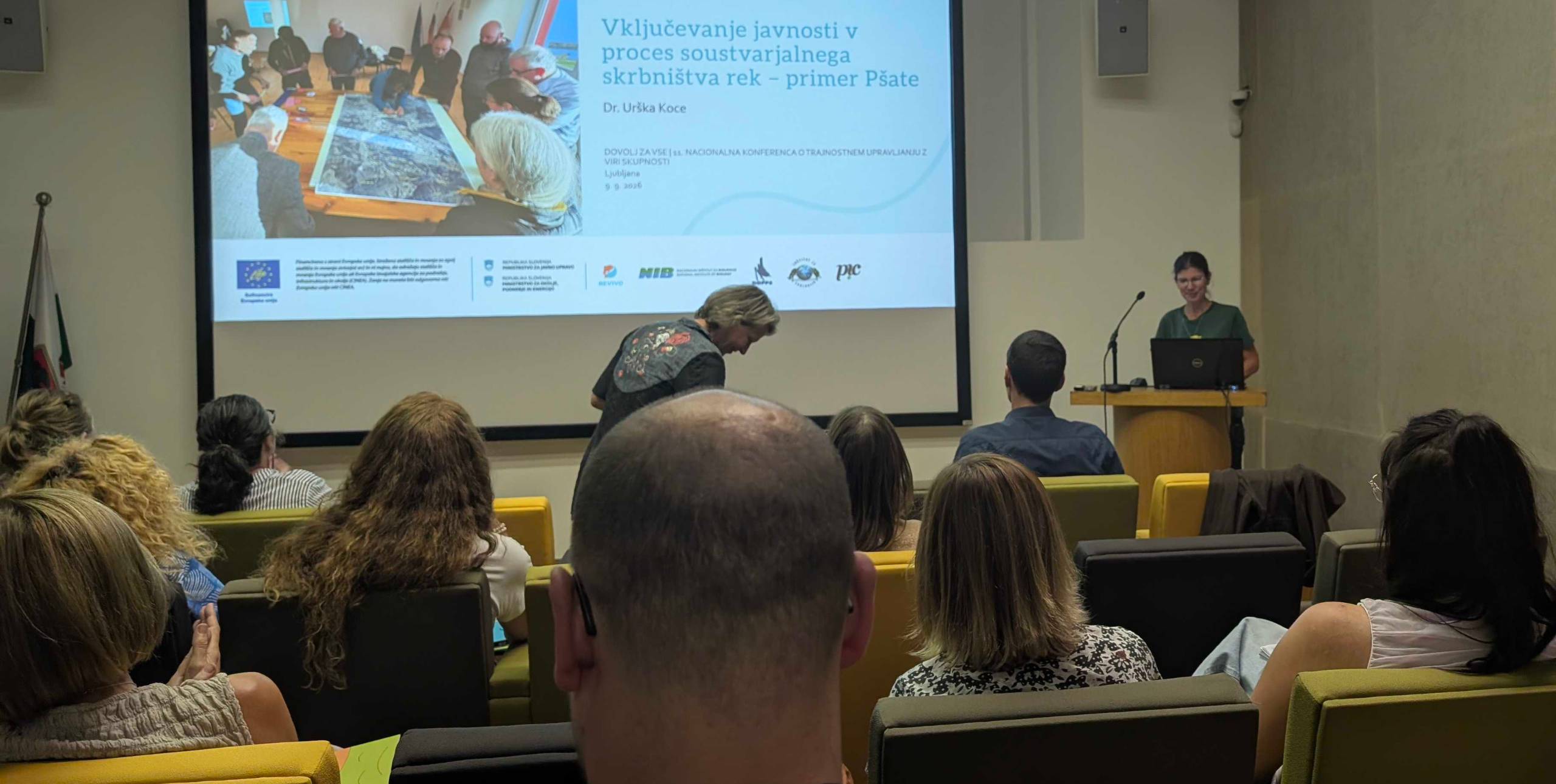
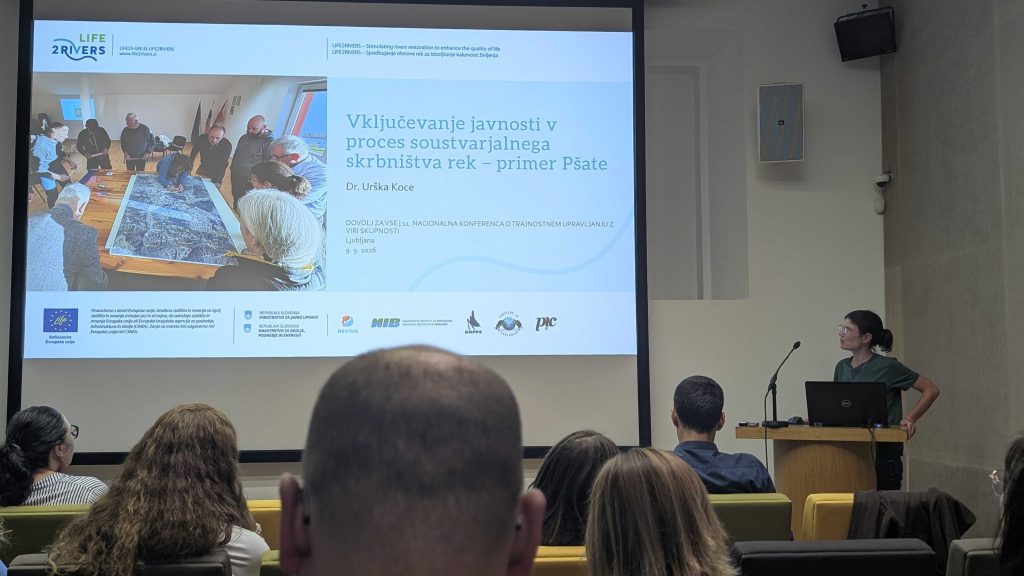
Our colleague Dr. Urša Koce yesterday, 9 September 2026, presented a contribution titled “Public Participation in the Process of Co‑creative River Stewardship – The Case of the Pšata River” at the 11th National Conference on the Sustainable Management of Community Resources – Dovolj za vse, held in Ljubljana.
Urša introduced the concept of co‑creative river stewardship – an approach that brings together people and diverse forms of knowledge to build a shared understanding of river-related challenges and to explore ways forward. At the same time, it supports the implementation of nature‑based solutions (NBS).
Professional work on river restoration is often too narrow and insufficiently connected across different fields. We see solutions in linking disciplines, integrating international experience, and learning from good practices, all of which help shape a more comprehensive view of how rivers should be managed. Such processes require time, open dialogue, and a willingness to connect different types of expertise. Scientific knowledge is complemented by the local and experiential knowledge of residents. It is precisely this combination of perspectives that enables a more holistic understanding of challenges and the development of solutions that are better aligned with the needs of the environment and the community.
Caring for rivers is not solely the task of institutions and professional services. Rivers are part of the spaces in which we live, work, and co‑create. This is why long‑term solutions must also include the voices of people who are connected to the river in their everyday lives.
Within the LIFE2RIVERS project, we are testing this approach on the Pšata River. Pšata is one of the areas where, together with local stakeholders and residents, we explore how diverse perspectives, knowledge, and experiences can help us better understand the river’s challenges and jointly shape possibilities for its restoration. We place particular emphasis on public participation, as we want the future of the Pšata to be shaped not only by experts and competent institutions, but also by the people who live with the river and experience it daily.