ALIVE RIVER – Episode 3: Loaches, the Secret Inhabitants of the Riverbed
In the third episode, we explore a group of fascinating yet rarely observed fish – the loaches.
Loaches are small, bottom‑dwelling fish that spend their lives hidden in the quiet world at the riverbed. Most of the day they remain concealed – buried in sand or tucked between gravel and aquatic vegetation. They become active only at night, when they venture out in search of food. Their three pairs of barbels help them probe the substrate and detect tiny aquatic invertebrates and plant particles.
All loaches have an elongated body, small subterminal mouths, and three pairs of barbels used for foraging. Beneath each eye, hidden in a skin fold, they possess a small, movable, bifurcated suborbital spine – an unusual feature that provides protection against predators.
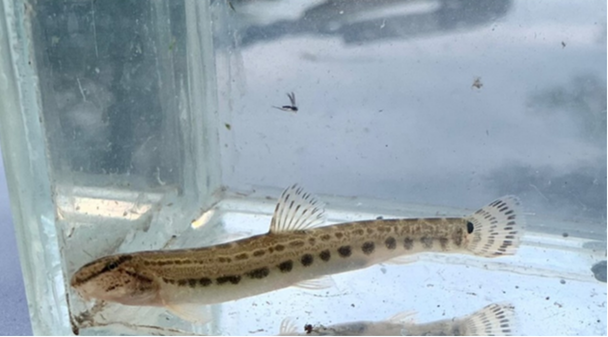
Photo: REVIVO
Four species occur in Slovenia: the Spined Loach (Cobitis elongatoides), the Elongated Loach (Cobitis elongata), the Adriatic Loach (Cobitis bilineata), and the Golden Loach (Sabanejewia balcanica). Although they appear very similar at first glance, careful observation reveals clear differences.
Most loaches are solitary. They spawn between April and June, depositing their eggs on aquatic vegetation (spined, elongated, and Adriatic loach) or directly into the water column (golden loach), where the eggs sink and adhere to gravel or stones.
Spined Loach (Cobitis elongatoides)
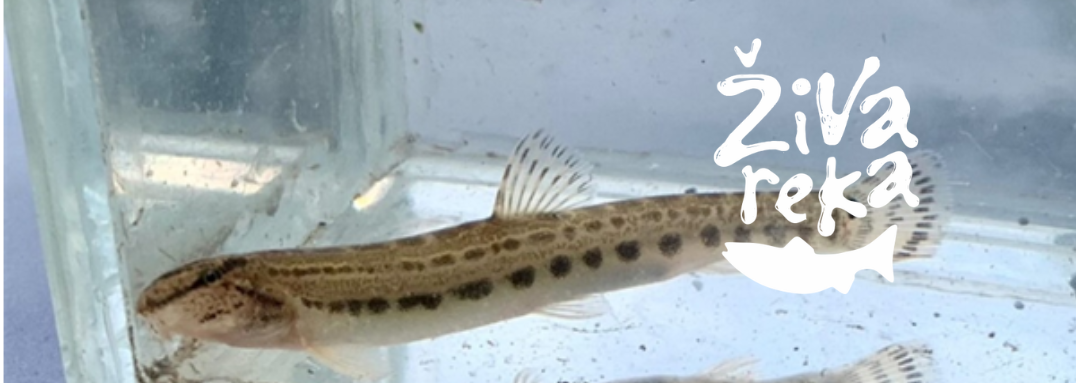
This species grows to about 8–10 cm. The head and the front part of the body are laterally compressed. The body is brownish‑yellow, with two rows of dark spots along the sides and a third row along the dorsal ridge. A distinct dark spot is present at the base of the caudal fin.
It is most commonly found on sandy substrates in lowland watercourses of the Danube basin.
Elongated Loach (Cobitis elongata)
At 12–15 cm, the elongated loach is the largest loach species in Slovenia. It resembles the spined loach but has an even more elongated and slender body. Dark body markings are also characteristic.
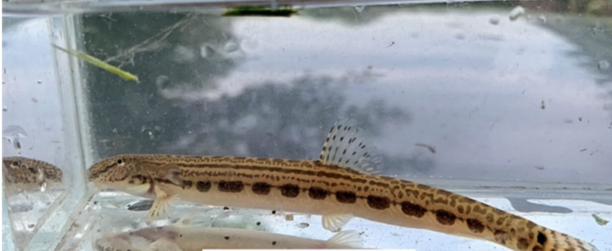
Photo: REVIVO
It inhabits the Danube basin and lives on the bottom of shallow mid‑altitude and lowland streams and large rivers with sandy, gravelly, or rocky substrates.
Adriatic Loach (Cobitis bilineata)
The Adriatic loach is native to the Adriatic catchment, particularly the lowland watercourses of the Vipava Valley and the lower Soča River. It resembles other loaches, but is distinguished by two dark spots at the base of the caudal fin.
Golden Loach (Sabanejewia balcanica)
The golden loach is slightly smaller, usually reaching 8–10 cm. It can be recognized by its distinctive pattern: a single row of larger angular spots along the sides, whereas other loach species typically have two rows. It is unique not only in appearance.
The golden loach belongs to the genus Sabanejewia, while the spined, elongated, and Adriatic loach belong to the genus Cobitis. It inhabits flowing waters of the Danube basin with sandy, gravelly, or rocky bottoms.
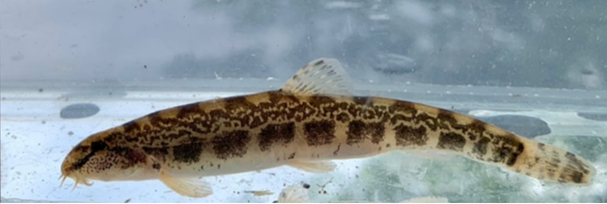
Foto: REVIVO
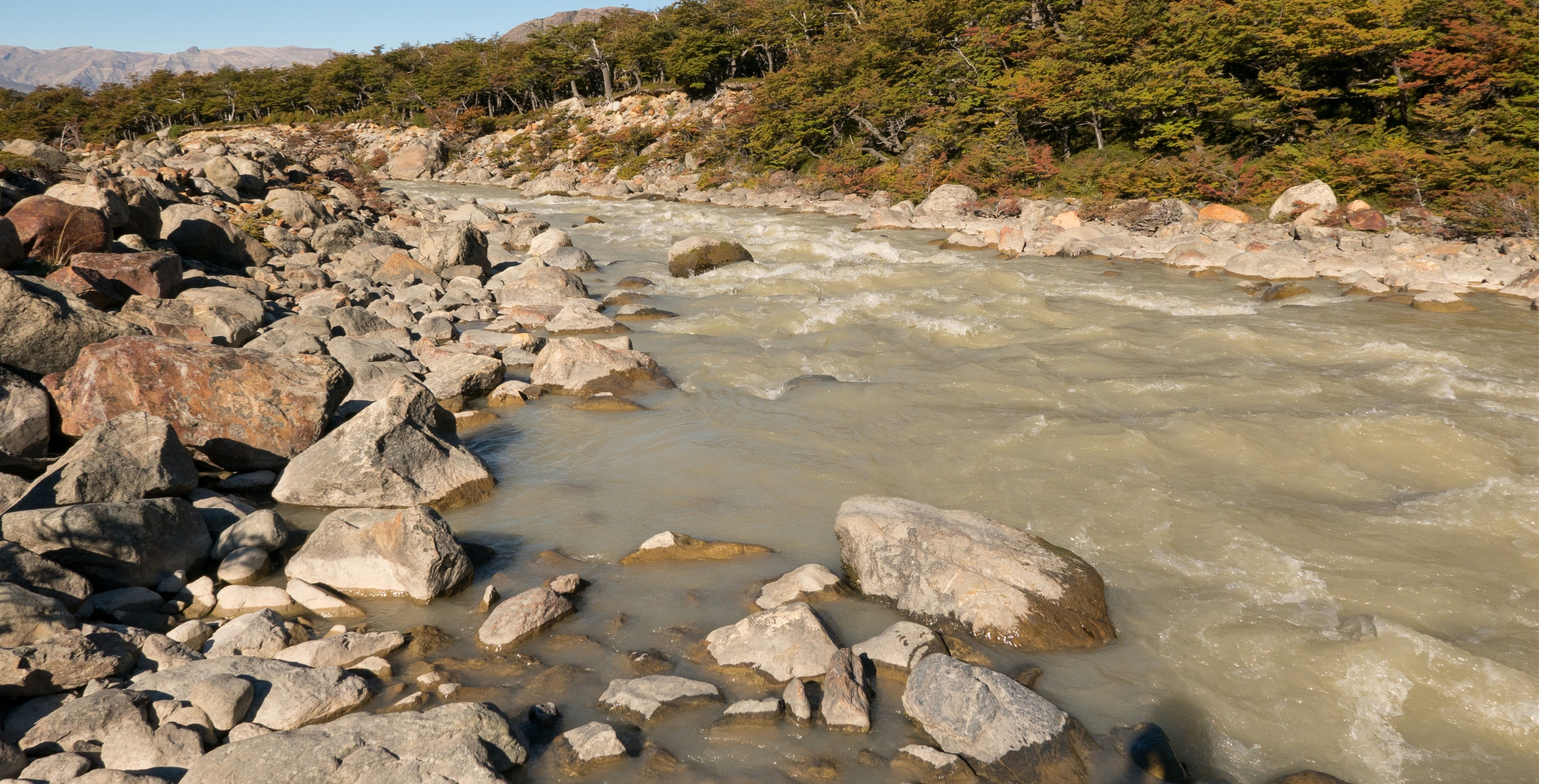
Loaches are closely tied to life at the riverbed. Their survival depends not only on water quality but also on the preservation of natural river channels, undisturbed substrates, and diverse microhabitats. They require areas with sand, gravel, stones, and vegetation, where they can hide, forage, and lay eggs. Changes to the riverbed, channelization, bank reinforcement, removal of sandy sediments or vegetation, and other interventions that disrupt natural river dynamics can significantly reduce their available habitat.
By protecting natural river channels and their structural diversity, we safeguard not only the water flowing through them – we also protect the hidden world at the river’s bottom, where loaches and many other river inhabitants live.
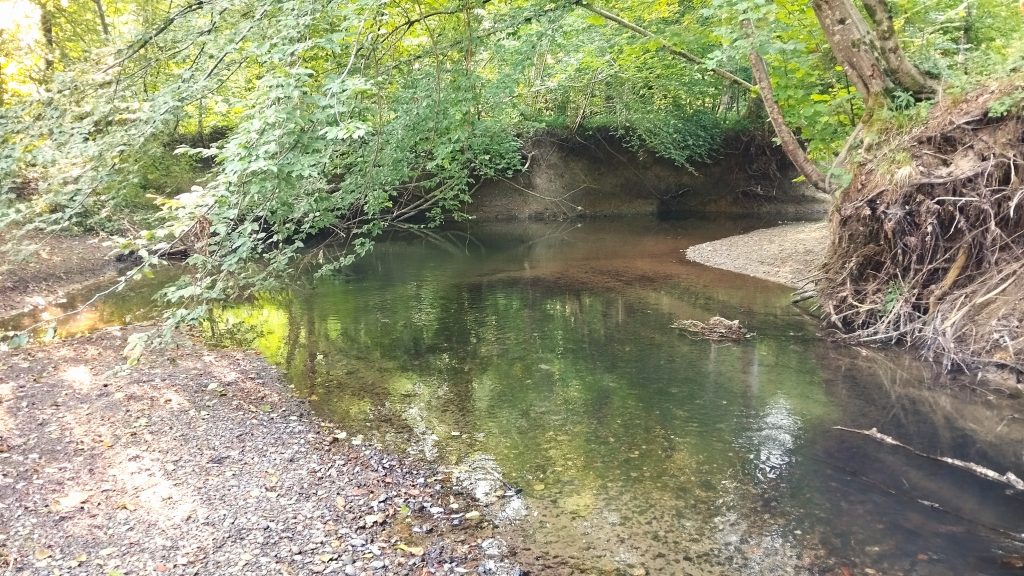
Foto: Urša Koce